

10.1 Introduction
Segregation is the physical and/or thermal nonuniformity of an asphalt mixture. Segregation is a construction defect and is detrimental to the performance of the pavement.
Segregation is a construction defect and is detrimental to the performance of the pavement.
Physical segregation is simply a nonuniform distribution of aggregate particles within an asphalt mixture. Areas of mix placed with concentrations of larger particle sizes will have larger air voids after compaction, which are likely interconnected, causing the compacted mat to be permeable.
Thermally segregated mix can meet mix design parameters but suffer from thermal differentials within a freshly placed mat that results in nonuniform and poor compaction.
Where segregation occurs, the finished mat will have a varied texture and may not meet specification requirements for surface texture, smoothness, or density. Segregated areas differ from the approved mix design, and the areas will not meet the required volumetric properties.
Segregation is typically understood to be physical segregation, therefore thermal segregation should be explicitly identified as such in discussions and text.
10.1.1 Reasons for Segregation and Consequences
The ratio of weight to surface area of a large aggregate particle is greater than that of a small aggregate, and therefore large aggregates tend to be more prone to migrate away from the mass. This migration of aggregate is typically the result of gravitational forces while the aggregate is in motion. Thus, physical segregation occurs when aggregates are being stockpiled and the larger aggregates tumble down the outside of the pile, leaving the smaller aggregates behind. Somewhat similar behavior occurs when a mix is dropped in storage silos, in truck loading and unloading, and in the paving machine when the mix is being pushed forward without confinement. These activities allow the largest aggregate in the mix, even while coated with binder, to migrate.
Physical and thermal segregation result in reduced density, a higher percentage of air voids, and mat permeability. Air and water intrusion will cause disintegration of the compacted mix. With time this results in early pavement failures and, on airports, the occurrence of FOD. The consequence is early maintenance with localized fixes or, depending on the extent and severity, complete removal and replacement.
Permeability testing of compacted mixes can determine the critical percentage of air voids at which the air voids become interconnected, allowing air and water intrusion into the mat. For dense-graded 1/2- and 3/4-inch NMAS mixes, the air voids typically become interconnected at or above 8 percent. For larger NMAS mixes, this transition to being permeable will occur at even lower air void contents. Permeability increases as NMAS increases and density decreases.
10.1.2 Locations Where Segregation Can Originate
Segregation is prone to occur most often at five stages: aggregate handling, mix production, mix storage, trucking, and laydown. Areas where handwork is required are also easier to segregate. Careful observation and control of mixing and placing operations during these stages can reduce or eliminate segregation in most asphalt mixes. The economic benefit of reducing or eliminating segregation has been universally recognized, and agencies that specify asphalt pavements are increasingly addressing ways to control segregation.
Some mixes are more prone to segregation than others, so designers should consider the propensity for segregation of a particular mix. Asphalt mixes that have large-sized coarse aggregate or have low asphalt binder content or are gap-graded will tend to segregate more than a dense-graded mix containing higher asphalt contents and smaller-sized coarse aggregate.
When segregation is observed, there are many process locations to inspect. The inspection starts with aggregate handling and stockpiling, then the many details of the mix production facility, the storage silos and batchers, the truck loading and unloading procedures, and finally the paving machine operations. There are many steps in the mix production process that remix materials to help alleviate mix segregation.
The practice of excessively raking the mat edges and joints should be minimized, as this can also cause segregation.
10.1.3 Early Opportunity to Observe and Correct
Physical segregation is typically first recognized visually in the paved mat. This is when early action is needed to avoid continuation of the problem. Cause(s) need to be determined and adjustments made. Identifying causes and correcting segregation in the mat is a process of working backward: from the paving process, to trucking and loading, to mix storage, to mix production, to aggregate handling.
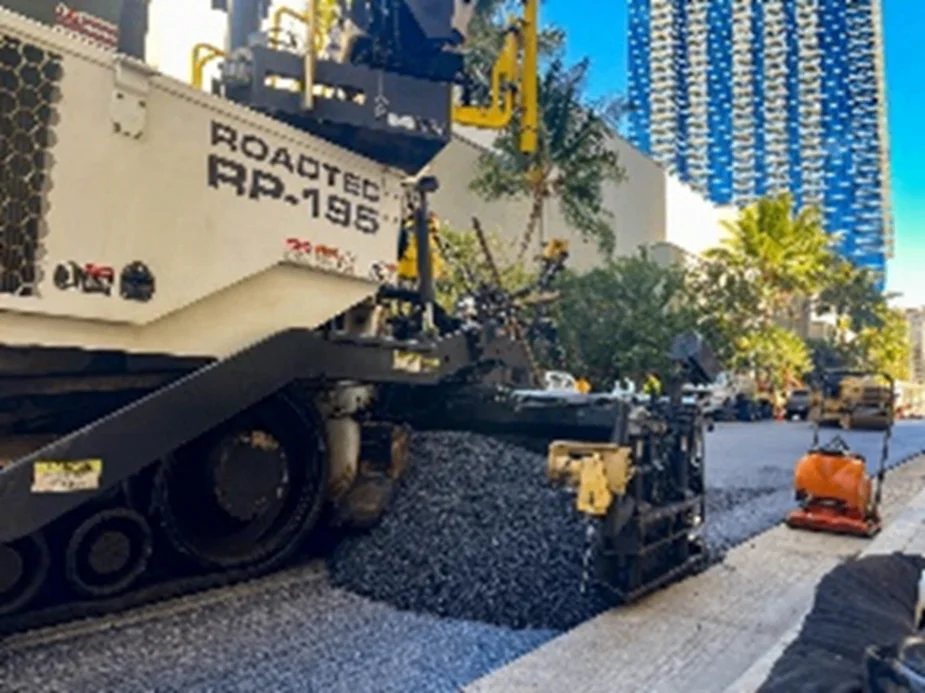
At the paver screed, a check should be done to ensure the mix is handled correctly by the augers. When paving wide without proper auger and tunnel extensions, the mix tumbles due to lack of support, and segregation potential increases significantly (see Figure 150).
Source: Hawaii Asphalt Paving Industry
Figure 150. Improper Auger and Tunnel Extensions Cause Segregation
At the paver hopper, the hopper should be kept at least 1/3 full, above the top of the slat conveyor tunnel opening(s).
The hopper wings should only be folded at the end of the paving shift. The mix caught in the corners should be left so that all newly deposited mix keeps flowing without being caught in dead corners of the paver hopper.
The use of an MTV can help eliminate both the physical and thermal segregation that occurs before the mix reaches the paver. Dumping mix from a truck directly into a paver hopper can cause segregation, especially over time. MTVs that convey mix directly into a hopper insert will reduce the potential for segregation in this area of the paver. Windrow elevators can also be used for remixing, as discussed in Section 7.2.3.
The use of an MTV can help eliminate both the physical and thermal segregation that occurs before the mix reaches the paver.
Recognizing the many possible segregation opportunities at the mix production facility is the responsibility of the plant operator and inspector and the contractor, and it may also require involvement by the equipment manufacturer.
Incorrect milling that leaves scabs behind (especially for thinner paving lifts) can cause segregation because of fluctuations in how the mix flows under the screed. Overlay lift thicknesses less than three times the NMAS are prone to segregation when placed on a milled surface. In addition, poorly processed RAP that contains oversized agglomerations of material can inhibit smooth and uniform mat placement.
10.2 Recognizing Physical Segregation, Causes, and Solutions
The following are the most common types of segregation in the mat:
- Chevron-shaped spots at the beginning and end of truckloads.
- Center of paver streaks.
- Edge segregation.
- Continuous longitudinal streaks at either or both sides of the lane.
- Random spots that occur intermittently throughout the roadway.
Recognizing the type of segregation will make identifying its cause easier.
10.2.1 End-of-Truck Segregation
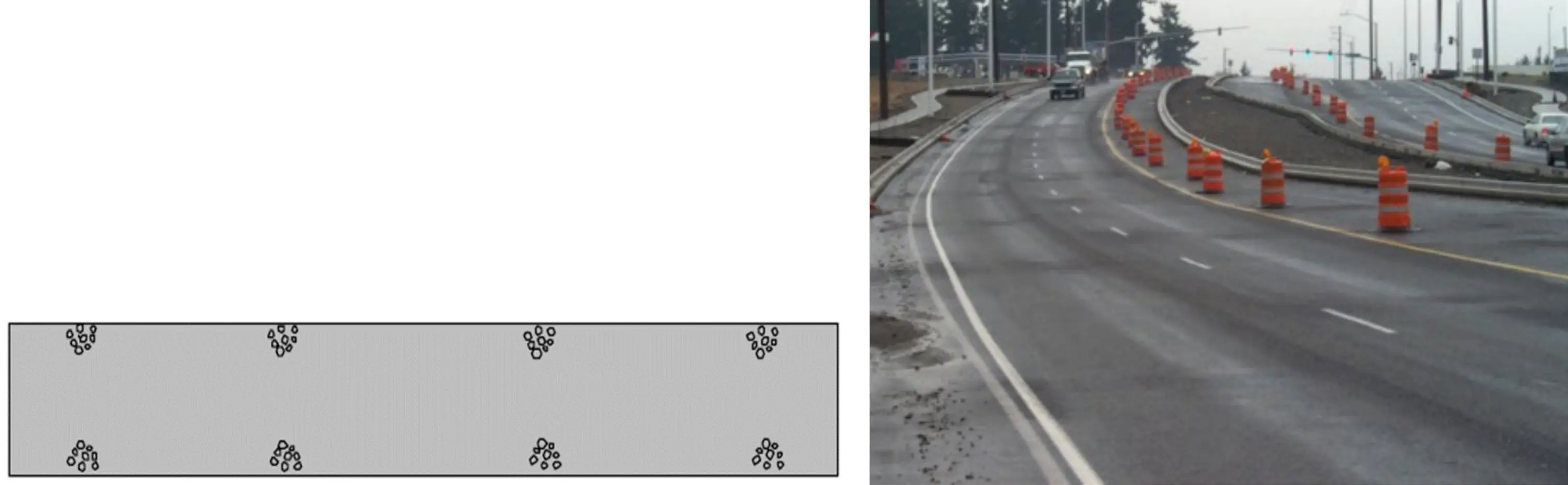
Truck-end (end of truckload) segregation shows up at regular intervals coinciding with the beginning and ending of each truckload discharge cycle. If the trucks are improperly loaded and unloaded, a segregation-prone mix will segregate when the mix starts being unloaded and then again when the last amount of mix comes out of the truck bed. It can be seen as a regularly spaced repetition of segregated areas down the road (see Figure 151).
Source: Asphalt Institute
Figure 151. Examples of Truck-End Segregation
Truck-end segregation has many potential causes. The most common is improper loading of the haul truck from the silo. If the mix is placed in the truck bed in one drop from the silo, the coarse aggregate particles in the mix tend to run to both the front of the bed and the back tailgate. This rolling of the coarse aggregate is exacerbated if the plant operator continuously opens and closes the silo gates near the end of the truck loading procedure to ensure that the full allowable weight of mix is placed on the truck. Segregation occurring along the sides of the truck bed during loading translates to the paver when unloading into the paver hopper. Segregated material, or material trickling into the hopper at the outer box edge, will accumulate in the outer area of the hopper wings. All these segregation locations (front, side, and rear) exacerbate segregated mat areas behind the paver when the hopper wings are folded between every load.
10.2.2 Centerline Segregation
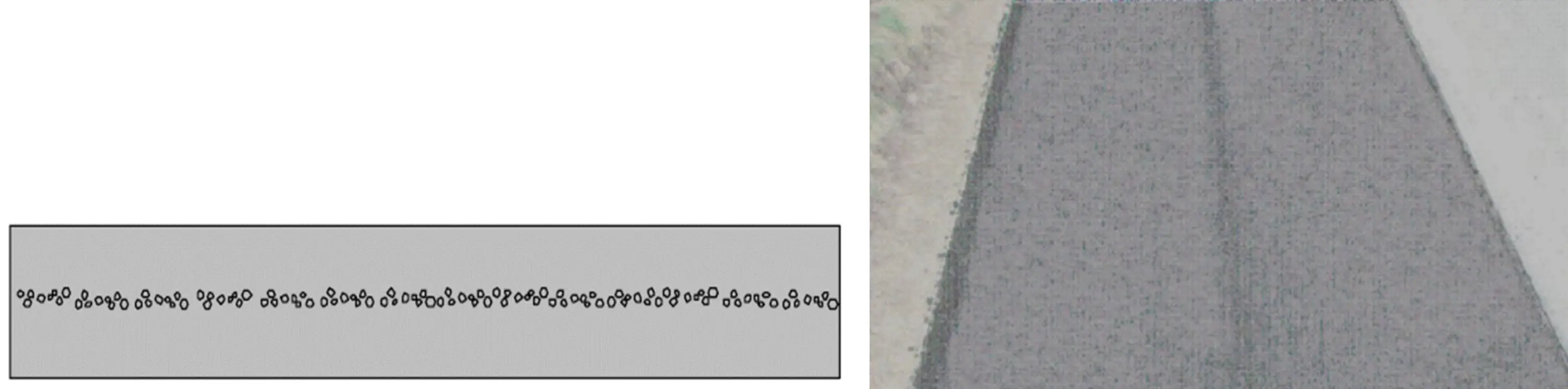
Centerline segregation (see Figure 152) is caused by the gear assembly that powers the augers. When placed too low, the augers and gear assembly may not provide enough clearance for the mix to counterflow to the center of the mat being placed. The result will be an insufficient, segregated mix in the center of the mat. When this occurs, the solution is to raise the auger gear assembly to give more clearance for the mix to flow to the center.
Source: Asphalt Institute
Figure 152. Examples of Centerline Segregation
Most paving machines have reverse flow or “kickback” augers right next to the auger drive assembly to alleviate centerline segregation. Sometimes these augers are worn or broken and need to be replaced.
10.2.3 Joint and Edge Segregation
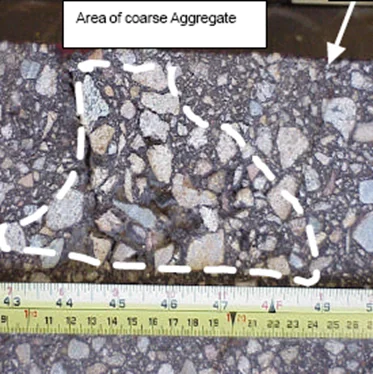
When the mix is not confined properly at the outer ends of the screed, the mix can segregate. This is especially possible when paving wide without auger and tunnel extensions. The further the mix is pushed to the sides by the augers without an auger extension, the more segregation can be expected. In addition, it is recommended that the tunnel (confining plate) is extended to prevent the mix from segregating forward. When the mix flows forward, vertical segregation may occur, which is less visible on the surface. However, cores will show the larger aggregates at the bottom of the lift (see Figure 153).
Source: American Society of Civil Engineers
Figure 153. Vertical Segregation (Top Different than Bottom of Cross Section)
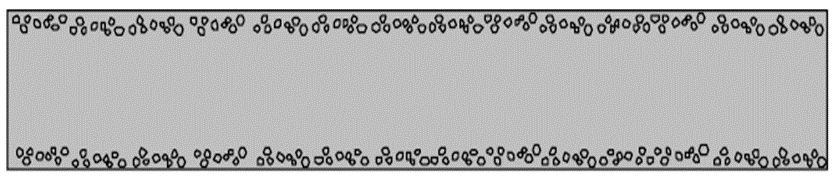
Joint segregation can also occur when the rakers make corrections near the joint (see Figure 154). Recommendations are to overlap the joint approximately 1 inch and let the roller compact this overlap down without raking or luting the overlap. Any crushed aggregate will soon weather away.
Source: Asphalt Institute
Figure 154. Illustration of Joint Segregation
10.2.4 Whole- or Half-Width Mat Segregation
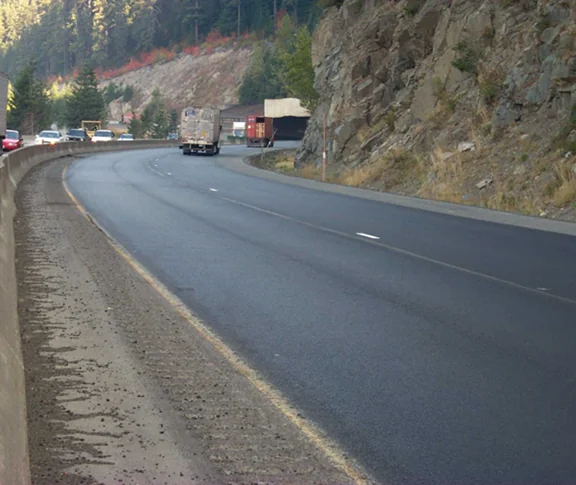
Whole- or half-width segregation (see Figure 155) can occur for several reasons.
The first reason is that one or both augers were provided insufficient mix. To avoid this, the mix should always be held close to the axle of the augers and at an even height across the auger chamber.
The second reason is that the mix was improperly loaded into the haul truck. If the mix is not loaded in the center of the width of the truck bed, the coarse aggregate particles in the mix may roll to one side of the truck bed and accumulate along that side. When the mix is delivered to the paver hopper, the segregated mix will be placed on the roadway along the same side, and the segregation will appear as a longitudinal streak on one side of the paver only.
Source: Texas Department of Transportation
Figure 155. Example of Half-Width Mat Segregation
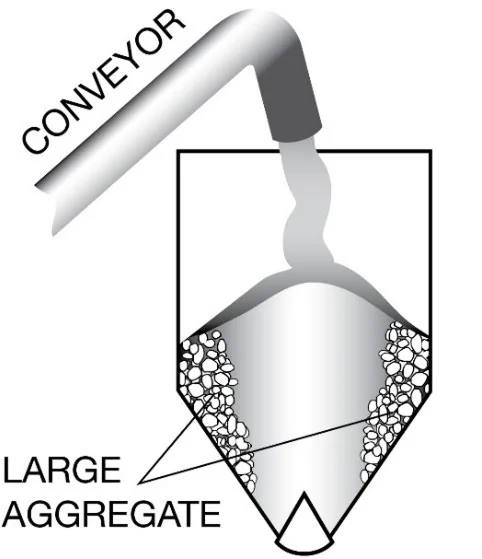
A third reason is that the mix was improperly loaded into the silo. As the mix is deposited into the silo from the conveying device (slat conveyors, belt conveyor, or bucket elevator), the mix may be thrown to one side, causing the coarse aggregate particles to be separated from the finer materials (see Figure 156).
When the silo is emptied, the coarse aggregate is deposited on only one side of the truck. This segregated material then passes through the paver and is seen on one side of the mix after laydown. Further, if the truck is not loaded in the center of its width under the silo, rolling of the coarse aggregate particles may occur, and longitudinal segregation can appear on one side of the mat. The illustration in Figure 156 shows the mix being conveyed into a gob hopper, which should reduce segregation as it deposits the mix into the silo in batches.
These first four types of segregation (end-of-truck, centerline, joint and edge, and whole- or half-width mat) originate at the trucking and paving operations. People working onsite should be able to notice, recognize, and correct these types of segregation as soon as possible.
Source: National Asphalt Pavement Association
Figure 156. Segregation in the Silo at the Plant
10.2.5 Random Segregation
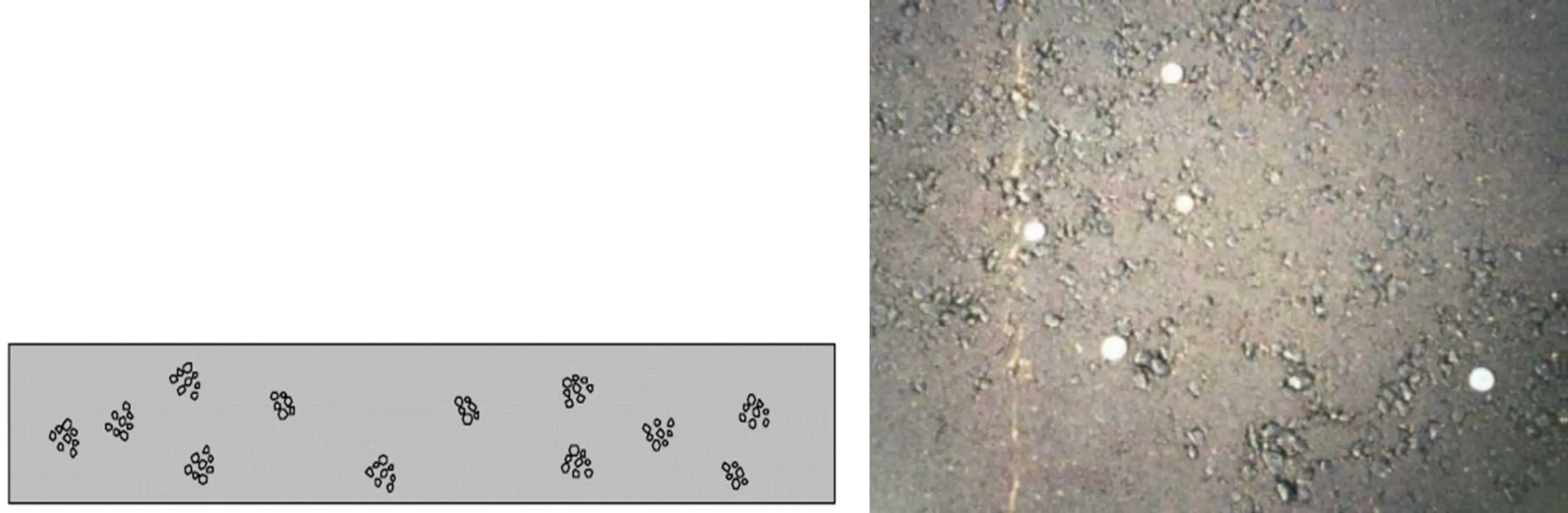
Contrary to the previous four examples of segregation, random segregation typically originates at one or a combination of locations upstream from the trucking and paving operation. It is less easy to identify in the mat because of its randomness, in part due to remixing opportunities (see Figure 157). This is the type of segregation the paving crew has little to no possibility of correcting. Investigations as to the location and cause are more complicated and involve inspections starting at aggregate handling and then going through the mix production, storage, and discharge process. Its level of severity in the mat will dictate if and what remedy is required. Large aggregate, gap-graded, and SMA mixes are more prone to this type of segregation.
Source: Iowa Department of Transportation
Figure 157. Random Segregation
Segregated rock pockets are generally caused by improper handling of the aggregate in the stockpiles or cold-feed bins or improper storage of the HMA at the asphalt plant.
These problems are reduced when a batch plant is used to produce the mix without a silo, because the screens and hot bins in the plant recombine any segregated material before it is fed into the pugmill. Further, the pugmill blends all the aggregates together and normally eliminates any segregation that might have occurred previously. If a silo is used on a batch plant, however, the mix may segregate for all the same reasons that affect a mix produced in a drum-mix plant and passed through a surge or storage silo.
10.3 Four Stages Where Segregation Can Originate

Watch Video
Segregation most commonly occurs at these four stages:
- Aggregate handling and stockpiling.
- Asphalt plant production.
- Trucking operations.
- Paver operation.
Segregation caused by the trucking and paving operations can generally be noticed by the paving crew, foreman, or inspector, and corrections can be made quickly. Conversely, segregation caused by aggregate handling and mix production may be more complex to pinpoint and therefore may not be corrected on the day the segregation was noticed.
The following sections address each of the four stages.
10.3.1 Aggregate Handling and Stockpiling
Stockpiles can be built properly, with minimum segregation, by end-dumping the aggregate from trucks to form piles that are only one layer deep. The challenge with this method is that it requires a lot of space since the stockpiles are not high.
Tall, conical stockpiles of aggregates should be avoided because coarser particles tend to roll down the sides of the pile. Stockpiles constructed in layers or material inclines with less than 30 percent slopes are preferred.
10.3.2 Asphalt Plant Production
Segregation issues in the asphalt plant are beyond what the paving crew at the jobsite can solve. Given the complexity of the asphalt production facility, the many locations where segregation may occur will require a lengthy investigation by contractor plant maintenance personnel and possibly the manufacturer’s technical assistance.
One of the most common causes of plant segregation is improper loader operation at the plant, which can contribute significantly to sporadic nonuniform segregation. Loading cold-feed bins from segregated stockpiles, placing the wrong material in the wrong bin, allowing the aggregate in the cold-feed bin to bridge (thereby halting the feed from that bin), or letting bins run dry will produce segregation in the mat behind the paver.
The following are additional locations in the mix production facility that may need to be looked at to ensure a uniform flow of material through the plant:
- Cold bins.
- Hot bins.
- Drum dryer flights.
- Hot elevator.
- Pugmill and bin gates.
- Surge and storage bins.
- Discharge systems.
Broken or poorly maintained equipment may require repair, fabrication, or even retrofitting plant equipment.
10.3.3 Trucking Operations
Segregation occurring due to the truck loading and unloading can typically be observed by field personnel and corrected quickly.
Asphalt mix can segregate as it is loaded into trucks from either the pugmill, silo, or surge systems. Trucks are much larger today, and care should be taken during loading to prevent coning within the truck bed.
Pugmills, silos, and surge systems all have the same truck loading recommendations. There should be at least three drops of material—front, back, and then center (see Figure 76 in Chapter 6). A single discharge into the truck allows larger particles to segregate. The mix should be placed first near the bulkhead to produce a stacking effect for the front and sides. The second drop produces the same conditions at the rear of the truck. The third drop, in the middle, should overlap the conical sides of the first two. This procedure does not eliminate segregation entirely but spreads it out and minimizes the effect.
The method used to unload the haul truck into the paver hopper may also contribute to segregation by generating longer slopes over which the particles may separate during dumping. Most problems of this kind develop from slowly raising the truck bed while dumping. When the truck is in place to dump into the hopper, the bed should be partially elevated before the tailgate is released. This permits the mix to move in mass and to flood the hopper, thus preventing the coarse aggregate from trickling out first and causing spotty segregation patterns.
10.3.4 Paver Operation

Watch Video
The paving operation is more than just knowing how to operate the equipment. Many mistakes in handling the mix in the hopper and in the auger compartment, and in operating the screed, can cause non-correctable segregation in the finished mat. The cause of such segregation should be corrected as soon as it is observed. If the cause cannot be identified and the segregation persists, the paving operation should be halted.
In the ideal paving operation, the paver should move forward at a constant speed all day without stopping and starting. However, some incidental stopping and starting is unavoidable. When this happens, both physical and thermal segregation is minimized by making a hard stop with sufficient mix in the hopper and in the auger chamber at the correct mix height. If the interruption in paving is expected to take too long (typically more than 30 min), actions comparable to what is done at the end of the paving day need to take place and a transverse joint created.
If segregation does occur during paving operations, the following are common causes.
Causes of segregation in the hopper:
- The hopper is allowed to be emptied below 1/3 of the hopper’s capacity.
- The hopper wings are folded at frequent intervals.
- The slat conveyors are allowed to be starved of mix and become visible.
- The flow gates are set incorrectly for the speed of paving.
- Spilled mix is being returned to the hopper.
Causes of segregation in the auger chamber:
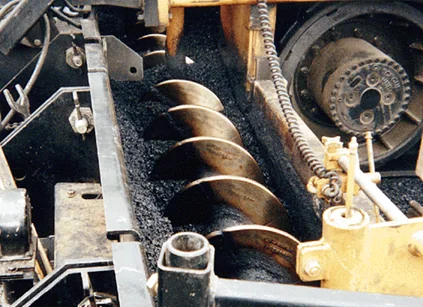
- The mix is not kept at a constant height and at the same level as the auger axle across the full width of the screed (see Figure 158).
- The height of the mix differs between the left and right side.
- If paving wider, the augers and the confining tunnel are not extended close to the end gate.
- The augers are not set high enough to allow reverse flow under the auger gearbox.
- The reverse augers near the auger gearbox are not present or working.
- The rotation speed of the augers is not within acceptable limits.
Any of the issues listed above have the potential of causing segregation.
Source: Reway
Figure 158. Proper Mix Height in the Auger Box
Continuous segregation can generally be attributed to operations and material handling at the paver. Regular spacing of segregated areas is typically end-of-load related.
10.4 Thermal Segregation
Thermal segregation is not identifiable without infrared monitoring, and therefore it will often go unnoticed. As with physical segregation, there are many locations where thermal segregation may originate. This type of segregation occurs most often in trucking procedures and paver operation.
Thermal segregation is not identifiable without infrared monitoring, and therefore it will often go unnoticed.
In trucking, the mix cools more quickly near the edge, bottom, and top of the haul truck. This cooler material is not always remixed with the hotter material, leading to temperature segregation during laydown and compaction. The result can be more variability with in-place density and a nonuniform surface. This problem can only be detected by infrared technology. Truck beds are often insulated for longer haul distances to reduce the potential for temperature segregation.
The use of MTVs has shown benefit in reducing segregation. The MTV remixes the mix, reducing both physical and thermal segregation. Temperature segregation can be minimized with a balanced, uninterrupted paving operation.
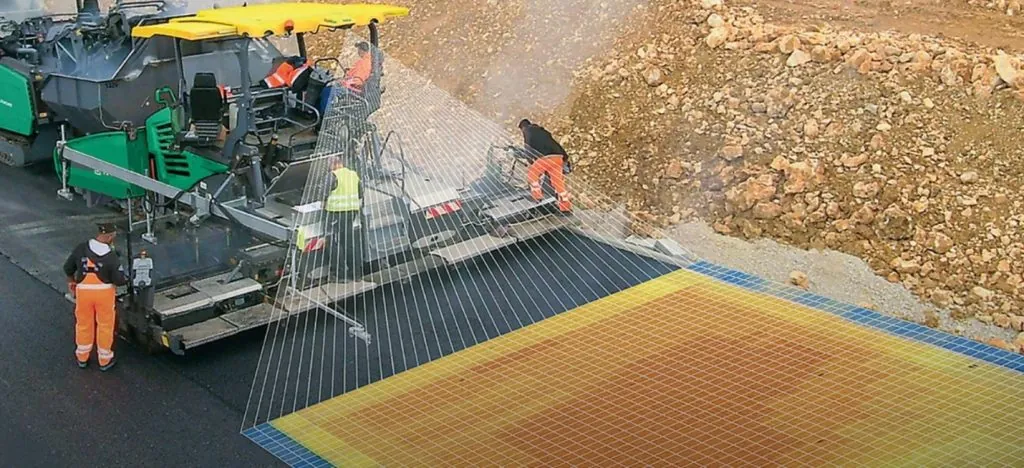
There are various ways to detect thermal segregation. These range from using a handheld infrared “gun” that spot checks surface temperature to more automated systems. These automated systems can scan the full width of the mat, record surface temperatures and location, and send the results in real time for analysis (see Figure 159). This allows for decisions regarding the construction operation and timely corrections if needed.
Source: VÖGELE
Figure 159. Paver Equipped with an Automated Infrared Scanner
Research by Willoughby et al. (2001)1 concluded that if the mix temperature differential is less than 25 °F (~15 °C), generally consistent compaction can be expected. But if the mix temperature differential is 25 °F (~15 °C) or greater, differential compaction can occur, and the in-place air void content will fluctuate.
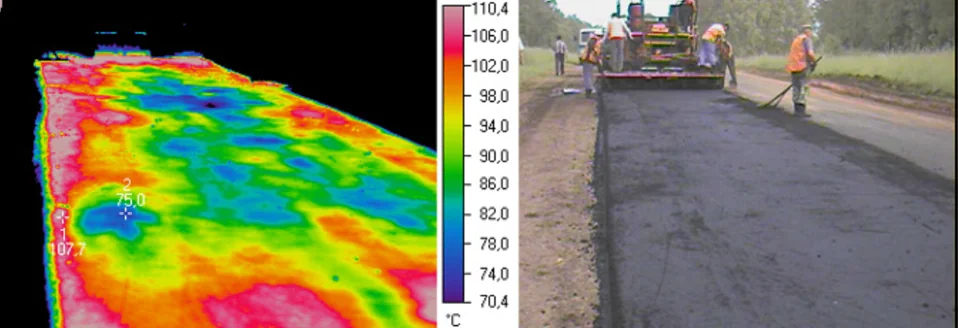
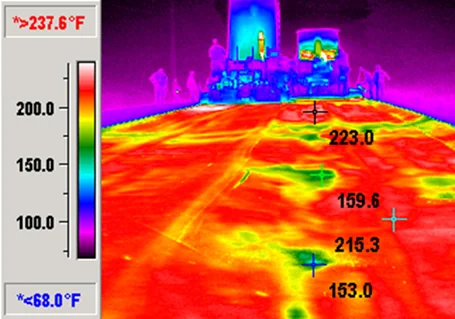
Highly segregated areas of coarse materials will tend to lose heat faster than surrounding areas of the freshly placed mat and appear in thermal imaging. Thermal segregation can be an indicator of the presence of physical segregation. Infrared data can identify cool spots in the mat and predict segregated areas (see Figure 160).
1K. Willoughby, J. Mahoney, L. Pierce, J. Uhlmeyer, K. Anderson, S. Read, . . . R. Moore, Construction-Related Asphalt Concrete Pavement Temperature Differentials and the Corresponding Density Differentials (Washington State Department of Transportation, 2001).

Source: Dorogi i Mosti Journal (top) and Pavement Interactive (bottom)
Figure 160. Segregated Areas (on right) Predicted by Cool Spots on Infrared
10.5 Confirming and Quantifying Segregation
Identifying the presence of physical segregation can too often be subjective.
It is best to recognize segregation as it is occurring and make corrections as soon as possible. Unacceptable areas of segregation should be replaced as part of the project contract during construction.
The severity of segregation falls into three general categories:
- Slight—Area where there is slightly more coarse aggregate than in the surrounding acceptable mix.
- Medium—Area has significantly more coarse aggregate than the surrounding acceptable mat and usually exhibits some lack of surface fines.
- Severe—Area appears very coarse in comparison to the surrounding acceptable mat, with stone against stone and little or no fines present.
Work is typically suspended when the medium or severe level of segregation is identified. This allows the contractor the opportunity to address and take corrective action against any further segregation on the project.
If the contractor and the agency agree that an area is significantly segregated, the repair, or even a remove/replace, often takes place quickly. However, if there is disagreement regarding the existence, severity, and extent of the segregation, a method to quantify segregation is helpful in reaching a resolution.
Physical and thermal segregation will cause the mix to be outside of the tolerances for one or several of the specification requirements. Comparing the segregated area test results with the test average, standard deviation, and range representing the rest of the lot’s test results is a way to quantify segregation.
Tests that can help identify and quantify segregation include the following:
- Infrared temperature readings (by scan).
- Density readings (nuclear or lab).
- Binder content (extraction/ignition oven).
- Aggregate gradation (after binder extraction/ignition oven).
- Permeability testing (field or lab).
- Sand patch test (ASTM E965).
Many of these tests are already performed for the general acceptance of the lots. Comparison can also be made to the tolerances from the approved JMF.
Permeability testing can be performed with either a laboratory falling head permeameter or a field permeameter.
A core taken from a visually segregated coarse area in the mat (also known as a rock pocket) will naturally have a lower binder content relative to an area that is not visually segregated.
A series of nuclear density gauge readings can be used to quantify segregation. Typically, a specified number of readings are taken in a prescribed pattern. If the range between readings exceeds specified limits, the mat is deemed segregated in that area.