The performance of an asphalt mixture under traffic is directly related to the condition of the surface on which the pavement layers are placed. For a full-depth asphalt pavement, if the condition of the subgrade soil is poor (particularly if it is wet and rutted under the haul trucks), the ultimate life of the roadway may be significantly reduced. For asphalt layers placed on top of a new, untreated granular base course, that base material should be stable, the surface should be dry, and the base should not be distorted by the trucks carrying mix to the paver. For mix laid on top of existing asphalt layers, that surface should be properly prepared, with all distresses and defects repaired and the surface cleaned. A tack coat should also be used to ensure a bond between the existing pavement surface and the new asphalt overlay. When asphalt mix is placed over a Portland cement concrete (PCC) pavement, the PCC surface should be properly prepared and a tack coat applied.
The performance of an asphalt mixture under traffic is directly related to the condition of the surface on which the pavement layers are placed.
5.2 Base Preparation for New Asphalt Pavements
5.2.1 Subgrade Soil
If the asphalt pavement is to be placed directly on the subgrade soil, that subgrade material should meet all applicable requirements for moisture content, density, structural support, grade, elevation, and smoothness. After the subgrade soil is determined to be ready for paving, and before paving is allowed to commence, the subgrade should be proof rolled to ensure it will be able to support the weight of the haul traffic. Proof rolling is a process where compacted soil is checked for soft areas in order to supply a balanced support system for the structure of the pavement. The subgrade must provide a firm foundation before the application of the prime coat or the asphalt paving begins. If distortion of the subgrade soil occurs during the paving operation, placement of the mix should be stopped until the condition of the soil can be corrected.
5.2.2 Granular Base Course
If the asphalt layer is to be constructed directly on a new or existing untreated granular base layer, that base material should be placed to grade and profile and meet all the requirements for moisture content, density, structural strength, and smoothness. Proof rolling should be done, however, on top of the granular base material, and the amount of deflection of the base and the amount of indentation of the truck wheels in the granular base course material should be noted. If the base material is stable and dry and does not deflect and indent significantly under the wheels of a loaded tandem axle truck, placement of the prime coat or the new asphalt mix should be permitted to start. If the condition of the granular material is not satisfactory, the base course should be reworked or stabilized until it is in the proper condition for overlaying. Check with the owner agency for any specific requirements they may have for proof rolling.
The prime coat acts as a temporary waterproofing layer that protects the subgrade soil as well as the base course. A prime coat helps maintain the prepared moisture content of the subgrade and base materials by preventing moisture from escaping while also helping to prevent these layers from absorbing excess moisture during rainfall before paving. Prime coats allow these layers to be used for light traffic on roadways, bind together any dust on the surface of these material layers, promote the bond, and prevent slippage between these layers and the new asphalt overlay. However, the main purpose of a prime coat is to protect the underlying materials from wet weather. If the underlying materials can be covered prior to the rainfall, then a prime coat may not be needed.
There is generally no need to place a prime coat of asphalt emulsion or cutback asphalt on the subgrade soil. This is especially true when the soil is a silty clay or clay material because the prime coat material cannot be absorbed into that subgrade material. The use of a prime coat on sandy subgrade soils is also questionable. If the sandy material displaces excessively under the wheels of the haul trucks, it should be stabilized with some type of binder material before paving to achieve the required load-bearing properties. In such cases, the application of a prime coat will generally not be enough to hold the sandy soil in place during paving operations. A prime coat should not be used as a substitute for proper preparation of the subgrade soil. When a prime coat is used, the prime coat material should be applied to the base course with a pressure distributor at least 48 hours before paving is to begin.
Historically, cutbacks have been the preferred prime coat material because of their superior penetrative qualities into the base. However, increased environmental restrictions on the use of cutback materials have led to their decreased availability and use. Industry has responded with the development of EAPs (emulsified asphalt primes) that improve an emulsion’s ability to mimic cutbacks in terms of penetration and are more environmentally friendly than cutbacks.
An EAP penetrates more slowly and is applied at a lower rate. Unlike a cutback prime, EAPs are most successful when mixed into the base material by a motor grader or rotary-mixer type equipment. This mixing can be done at the time of final grading and rolling of the base material. Prime applications are done under the same general weather conditions as paving; however, for cutbacks to properly cure, 24 to 72 hours of favorable weather are required. Curing times depend greatly on the material and weather conditions.
The ideal prime rate is the amount of material that the aggregate base will absorb in a 24-hour period. Typical application rates for prime coats vary with the type of prime coat material used. When a medium-curing cutback—either an MC-30 or MC-70 as specified in AASHTO M 82—is used, the application rate ranges from 0.2 to 0.5 gal/yd2 (0.9 to 2.3 L/m2). When an EAP is used, application rates vary from 0.1 to 0.3 gal/yd2/inch of scarification depth (0.5 to 1.4 L/m2 per 25 mm of depth). Exact application rates are determined by the project engineer under the prevailing conditions at the time the work is done. If all the prime coat material is not completely absorbed, the excess should be blotted with sand or removed.
Asphalt Surface Preparation for Asphalt Overlays
The degree of preparation needed for an existing asphalt pavement depends on the condition of that surface. At a minimum, failed areas should be removed and replaced, potholes properly patched, cracks cleaned out and sealed, and ruts filled in or, preferably, removed by cold milling.
5.3.1 Pavement Replacement and Patching
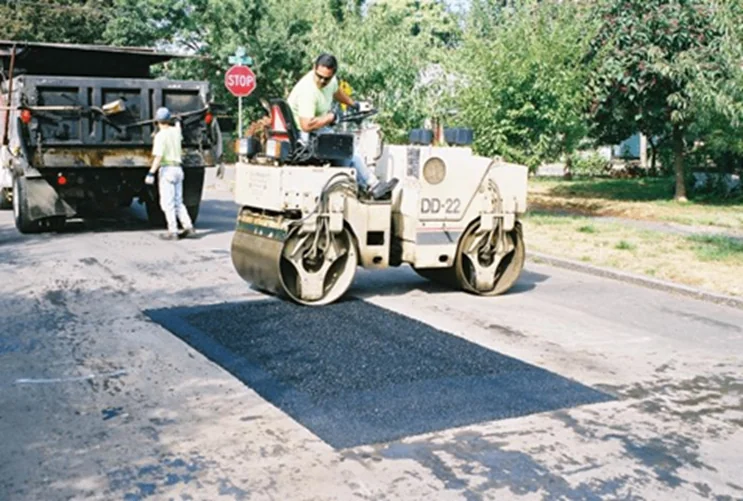
It is inadvisable to attempt to cover failed areas of an existing pavement with new overlay material. Removal and replacement should be carried out on all existing pavement areas where severe load-related distress has occurred. All asphalt mixtures and granular base materials that have failed should be excavated or cold milled and then either recycled or wasted. Subgrade distortion should be repaired by undercutting and replacement with suitable backfill material. Proper subsurface drainage should be installed as necessary. New granular base course material, a stabilized base course, or asphalt mix should be placed to bring the strength of the pavement structure in each failed area to the same level as the surrounding good pavement layers. If asphalt mix is used to patch a large area, it should be placed with a paver and compacted with one or more large rollers. Localized failed areas should be patched properly. Each area should be cut back to sound pavement and squared up, with the sides as vertical as possible, the loose material and water in the hole removed, a tack coat applied to the sides and bottom of the hole, the mix placed in the hole, and the new material adequately compacted, preferably with a roller (see Figure 56, Figure 57, and Figure 58). If the pothole is deeper than 4 inches (100 mm), the mix should be placed in more than one layer and each layer compacted properly. If the number of localized patches required is excessive, consideration should be given to full lane replacement, considering all economic and operational impacts.
It is inadvisable to attempt to cover failed areas of an existing pavement with new overlay material. Removal and replacement should be carried out on all existing pavement areas where severe load-related distress has occurred.
Source: Asphalt Institute Figure 56. Existing Material Removed Prior to Patching
Source: Asphalt Institute Figure 57. Material Placed in Localized Patch
Source: Asphalt Institute Figure 58. Compaction of Patch
5.3.2 Crack Filling
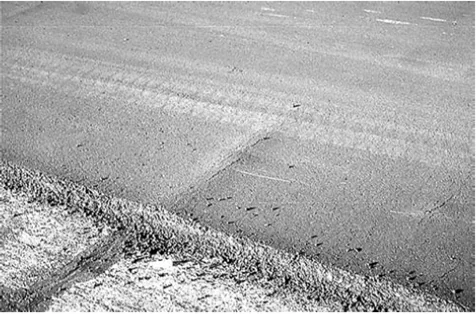
Badly cracked pavement sections, especially those with pattern cracking (e.g., map or alligator), must be patched or replaced. The benefits of filling other cracks in the existing surface depend, in part, on the width of the cracks. If the cracks are narrow (less than 3/8 inches [10 mm] in width), it is doubtful that the crack-sealing material will enter the crack instead of pooling on the pavement surface. Such cracks should be widened, if desired, with a mechanical router before sealing is attempted. If wider cracks are present, they should be blown out with air and cleaned of debris. The crack-sealing material should be inserted when the cracks are clean and dry. The level of the filling material for the crack should be slightly lower than that of the surrounding pavement surface and should not spill over the top of the crack, where it could create a bump in the new pavement layer during the rolling process (see Figure 59). Previously overbanded cracks may require the aged sealant material to be heated and scrapped from the surface of the pavement prior to placing an overlay to prevent the same bump creation. If cracks are wider than 1 inch (25 mm), or if the pavement on either side of the crack is slumping, then a mastic sealing process is encouraged prior to overlay to promote a smoother finished surface.
Depending on the cause of the cracking, the amount of reflective cracking that occurs in an overlay can sometimes be reduced using a surface treatment (seal coat) on the existing pavement. If that pavement structure contains a great number of cracks, consideration may be given to applying a surface treatment instead of filling individual cracks. The cracks should be cleaned, if feasible, by being blown out with air. The surface treatment should be applied when the pavement surface is clean and dry and should consist of a single application of asphalt binder material (asphalt binder, cutback asphalt, or asphalt emulsion) and cover aggregate. While not too common, a slurry seal consisting of an asphalt emulsion, fine aggregate, and water may alternatively be used.
Source: U.S. Army Corps of Engineers Figure 59. Bump Caused by Excessive Use of Crack Sealant
5.3.3 Leveling Courses
Common practice in the past has been to place a leveling course on the existing pavement surface to improve the rideability of the pavement structure. This leveling course, sometimes called a wedge and level course or a scratch course, is designed to fill in the low spots on the pavement surface. The leveling action is accomplished using the floating screed on the paver, with more asphalt mix being placed in the low spots than on the high spots in the existing pavement surface. The areas with thicker mix, however, typically compact more than areas with thinner mix. This problem, termed differential compaction, requires that multiple courses be constructed over a pavement surface that is badly out of shape before a smooth surface can be obtained.
As the mix passes from under the paver screed, it is in a relatively loose condition, being just slightly compacted by the vibratory screed. Compaction by the rollers reduces the thickness of the newly placed layer. The rule of thumb is that conventional mixes will compact approximately 1/4 inch per 1 inch (6 mm per 25 mm) of compacted thickness. Thus, to achieve a compacted course 1 inch (25 mm) thick, about 1-1/4 inches (31 mm) of mix would have to be placed by the paver. Similarly, approximately 3-3/4 inches (95 mm) of mix would need to pass from under the paver screed to construct a layer with a compacted thickness of 3 inches (75 mm). Also, better results for leveling courses have been noted when the gradation is on the fine side of the MDL. The asphalt mixture shall be placed at a compacted lift thickness no less than 3 times its NMAS for fine-graded mixes and no less than 4 times its NMAS for coarse-graded mixes. Moreover, a smaller NMAS gradation is advisable, as larger-sized gradations are more prone to their largest stones dragging and marring the surface created in high spots of the leveled surface.
When a leveling course is placed, the asphalt mixture laid in the low areas (in the wheelpaths if the pavement is rutted) will be thicker than the mix placed over the high points in the surface (between the wheelpaths). The thicker mix will compact more under the rollers, particularly if a pneumatic tire roller is used, than will the mix that is thinner. Thus, low spots will still exist in the wheelpaths where the mix has been compacted to a different degree (and thus a different air void content) than the mix between the wheelpaths. Because of the problem of differential compaction, multiple layers of mix are usually needed to eliminate the roughness in the existing pavement surface. A rule of thumb is that one layer after compaction will remove approximately 80 percent of a low spot. Two layers, each being compacted separately, will remove approximately 95 percent of a low spot
Milling, also called cold planing, is a process that removes a portion of the existing pavement layer to provide the desired surface elevation and texture for asphalt or concrete overlays. In general, the milling is categorized into full or partial depth depending on the amount of material removed, which is often dictated by the existing pavement condition. Full-depth milling refers to the removal of the entire asphalt layer down to the base and applies to the severely deteriorated pavement structure. Partial-depth milling removes only an upper portion of the asphalt layer that is distressed (rutted and/or cracked), and the remaining asphalt layer continues serving as a structural layer after rehabilitation. Determining the milling depth is a primary concern of partial-depth rehabilitation since the milling depth affects the quality, productivity, and project cost. The goal is to mill to a depth below the distresses so as not to inhibit the desired performance of the new asphalt layer.
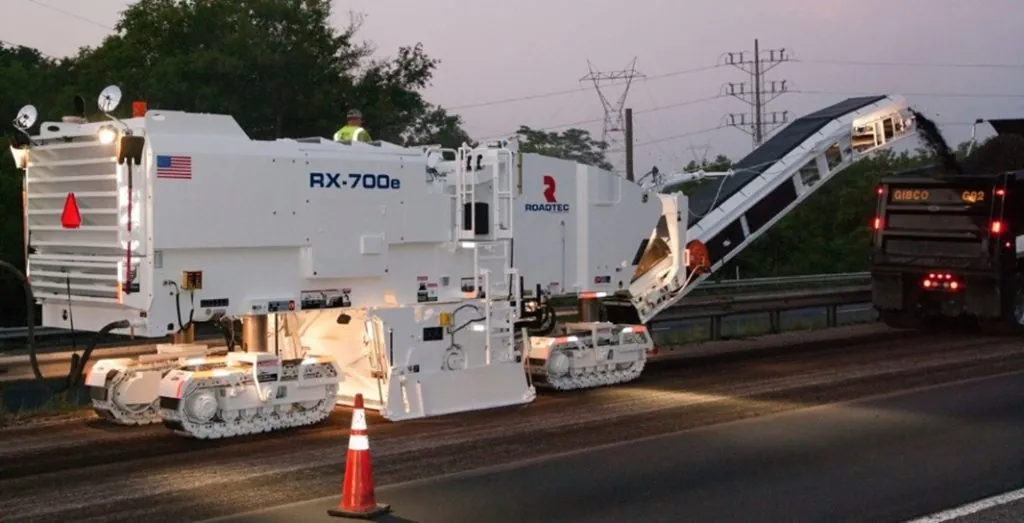
Milling can be accomplished in any width necessary, from 6 inches (150 mm) to more than 13 ft (4 m). Figure 60 shows a typical milling machine. If equipped with automatic grade and slope controls like those used on an asphalt paver, the milling machine can produce a level surface in one pass over the existing surface. The RAP produced by the milling process can be hauled back to the asphalt plant for future recycling. In addition, if the milled surface is properly cleaned, its texture can enhance the bond between the new and old layers and may reduce the possibility of slippage of the overlay over the existing surface.
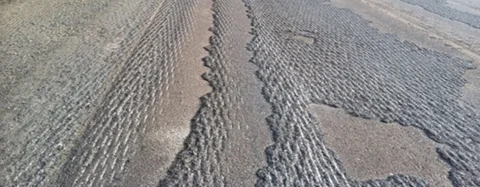
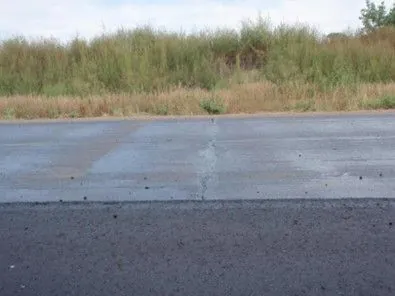
When the milling depth is variable or slightly thinner than the existing asphalt lift thickness, a “scab” may form. A scab refers to a thin layer of an existing layer that was not completely removed in the milling process (see Figure 61). The scab often results in variations in surface texture and elevation. In addition, the bond between the scab and the remaining existing asphalt may also weaken during the milling and paving process. Scabbing is likely to contribute to lower ride quality and density issues due to differential compaction between the scabbed and non-scabbed areas. Scabbing is also likely to cause premature pavement distresses, including cracking and delamination, that eventually shorten pavement surface life. To prevent scabbing, the contractor should closely monitor milling depth, especially when milling over concrete pavement. If scabbing occurs during the milling operation, the contractor should lower the milling head to fully remove the scabbing or drop back and perform another pass to fully remove the scabbing. The contractor and owner should agree on any adjustments to the milling depth as this will likely result in more asphalt mix to be placed, resulting in a contract overrun. Slowing the forward speed of the milling machine may also help mitigate the occurrence of scabbing.
Source: Asphalt Institute Figure 61. Scabbing
A pavement surface that has been milled is typically very dusty and dirty. Once the pavement has dried, multiple sweepings with a mechanical broom are usually needed to remove all the residual grit from the milled surface. In some cases, it may be necessary to dampen the milled surface before sweeping or to air-blow or flush the milled surface with water to remove dust and very fine material completely. While this cannot be done on airfields, opening the milled surface to traffic will help remove the dust and very fine material. Any dust and dirt left on the milled surface will greatly affect the bond between that course and the new asphalt overlay.
Any dust and dirt left on the milled surface will greatly affect the bond between that course and the new asphalt overlay.
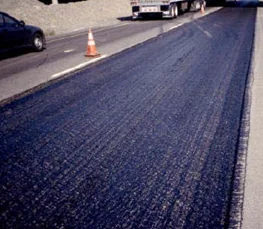
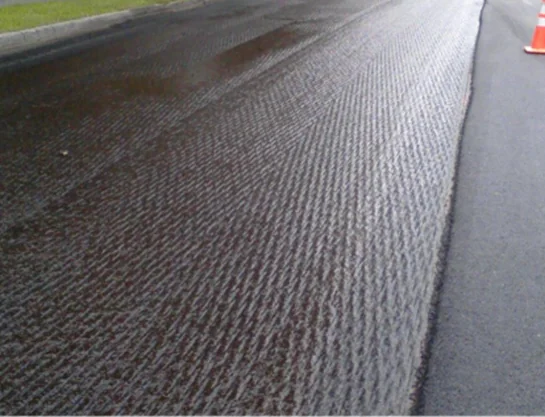
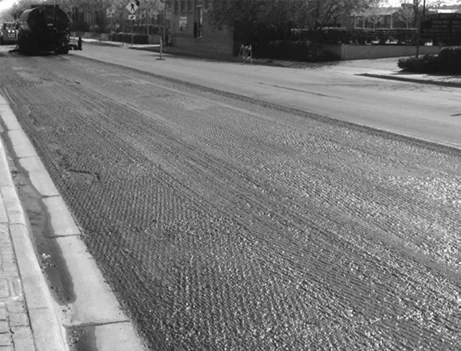
Because of the increased surface area of the milled pavement (from the grooves left by the cutting teeth on the milling machine), an additional quantity of tack coat material may be required to ensure an adequate bond between the old and new layers (see Figure 62). That increased quantity is a function of the type, number, condition, and spacing of the teeth on the cutting mandrel of the milling machine but is typically in the range of 20 to 30 percent more than for an unmilled surface.
Source: Asphalt Institute Figure 62. Tack Coat on a Milled Surface
5.4 Pcc Surface Preparation For Asphalt Overlays
When asphalt mix is placed over a PCC pavement, the PCC surface should likewise be properly prepared. Any severely distressed areas in the concrete slabs should be cut out, removed, and replaced with either a PCC or asphalt mixture using full-depth slab repair techniques. Corrective work should also be completed on the underlying subbase or subgrade material, if necessary. Any severely spalled areas at joints should be repaired using partial-depth slab replacement methods. PCC should be used for partial-depth repairs. Rocking slabs should be stabilized. Depending on the condition of the PCC pavement, procedures such as crack and seat, break and seat, or rubblizing of the existing pavement can be used before the overlay is placed, particularly if the slabs are rocking under traffic loading. Consideration can also be given to the use of a crack-relief layer between the existing PCC pavement and the new overlay.
For joints that are poorly sealed, the old seal material should be removed and the joints cleaned. When dry, the joints should be resealed with appropriate joint-sealing material. Care should be taken not to overfill the joints, particularly in cool weather when they are open wide. In all cases, as with crack sealant, the final level of the joint-sealing material should be below the top of the surrounding pavement surface. Once the patching and resealing have been accomplished, the surface of the PCC pavement should be cleaned completely using mechanical brooms and air blowing or water flushing, or both, where needed.
The purpose of a tack coat is to ensure a bond between all asphalt layers. The tack coat should not be used in lieu of cleaning the existing surface—removing accumulated dust and dirt by mechanical brooming or by flushing with air or water. If a good bond is not formed between the existing surface and the new overlay, slippage may occur. The new overlay may be shoved in a longitudinal direction by traffic, particularly at locations where the traffic accelerates or where vehicle brakes are applied. More importantly, poor bonding will significantly reduce a pavement’s fatigue resistance, taking years off its life. Thus, the pavement surface must be clean before the tack coat is applied.
5.5.1 Tack Coat Materials
The tack coat material is normally asphalt emulsion but can also be asphalt binder or cutback asphalt. A survey completed in NCHRP Synthesis 516, Tack Coat Specifications, Materials, and Construction Practices, indicated that emulsions are the most common tack coat materials, with SS-1, SS-1h, CSS-1, and CSS-1h being the most widely utilized emulsion grades for tack coat in North America. Many other emulsified products are also used, such as quick set (QS), anionic rapid sets (RS-1 and RS-1h), and cationic rapid sets (CRS-1 and CRS-1h). Specifications for these emulsions can be found in AASHTO M 140 (anionic emulsions) and AASHTO M 208 (cationic emulsions). Many new proprietary products classified as reduced-tracking tack materials are also growing in use. Reduced-tracking tacks are designed to improve pavement performance by avoiding the tracking problems associated with traditional tacks. These materials are typically manufactured to harden quickly and adhere minimally to construction vehicle tires.
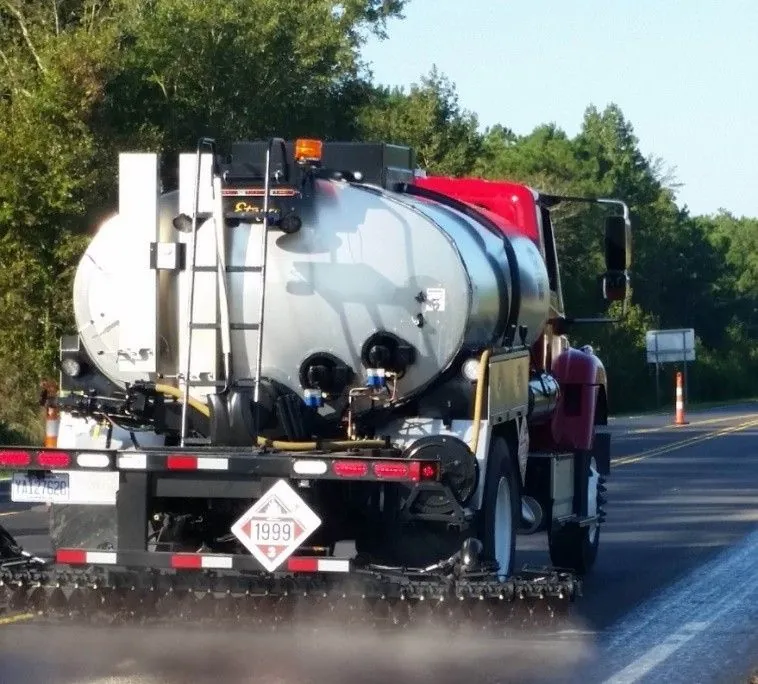
Tack coat materials should be applied by a pressure distributor, as shown in Figure 63. All nozzles on the distributor should be appropriately sized, fully open and functioning, and should be turned at the same angle to the spray bar (approximately 30 degrees). In addition, the spray bar should be at the proper height above the pavement surface to provide for a double or triple lap of the liquid asphalt material. The result will be the proper amount of overlap between the nozzles and a uniform application of the tack coat to the road surface. The tack coat material should be heated to the proper temperature so that it is fluid enough to be sprayed uniformly from the nozzles instead of coming out in strings.
Source: Asphalt Institute Figure 63. Distributor Applying Tack Coat
5.5.2 Tack Coat Application Rate Versus Residual Rate
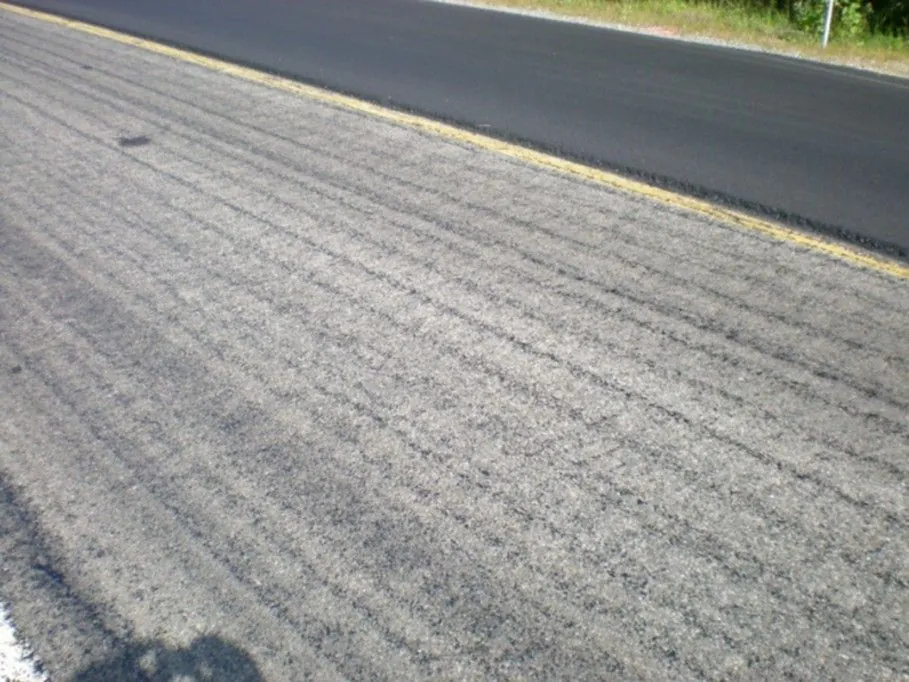
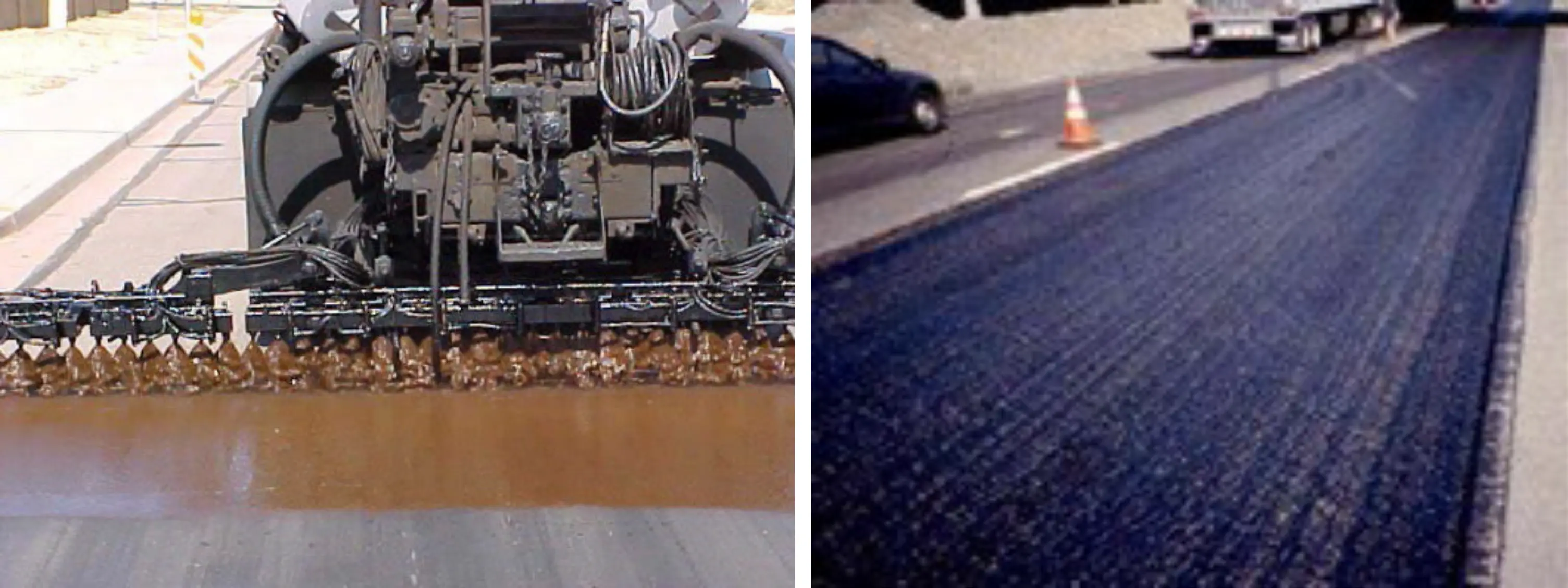
Uniformity of application and a proper application rate are key to achieving a successful tack coat. Figure 64 and Figure 65 illustrate a tack coat application that is uneven due to improper equipment operation, with too much tack coat in some areas and not enough in others. Proper tack coat application, shown in Figure 66, will leave a residual asphalt binder content of approximately 0.040 to 0.070 gal/yd2 (0.181 to 0.317 L/m2) on the roadway. The amount of residual tack coat needed will depend on the condition of the pavement surface. An open-textured surface requires more tack coat than a surface that is tight or dense, and a dry, aged surface requires more tack coat than a surface that is “fat” or flushed. In addition, more tack coat may be needed on a milled surface because of the increased surface area, as discussed earlier. A residual rate of as much as 0.080 gal/yd2 (0.362 L/m2) of asphalt binder may be needed to ensure a proper bond. Recommended residual application rates for various surface types can be seen in Table 5 and Table 6.
Uniformity of application and a proper application rate are key to achieving a successful tack coat.
Source: Asphalt Institute Figure 64. Non-Uniform Application of Tack Coat
Source: Dr. Imad Al-Qadi Figure 65. Non-Uniform Application of Tack Coat
Source: Asphalt Institute Figure 66. Uniform Application of Tack Coat
Table 5. Recommended Tack Coat Application Rates—U.S. Customary Units
Source: Asphalt Institute *Assumes emulsion is 33% water and 67% asphalt.
Table 6. Recommended Tack Coat Application Rates—Metric Units
Source: Asphalt Institute *Assumes emulsion is 33% water and 67% asphalt.
It is essential to differentiate between the residual tack coat rate (the amount of asphalt binder remaining on the pavement surface after the water has evaporated) and the application rate (the amount of emulsion sprayed from the distributor). Most asphalt emulsions contain 60 to 65 percent residual asphalt binder and 35 to 40 percent water, plus a small amount of emulsifying agent. For ease of calculation, it can be assumed that an asphalt emulsion is approximately two-thirds asphalt cement and one-third water. The amount of asphalt binder left on the pavement surface after the water has evaporated from the emulsion is the most important factor in obtaining a bond between the existing pavement surface and the new overlay. If the project only specifies the residual application rate and not the undiluted application rate, the undiluted rate can be determined by starting with the amount of residual asphalt cement required on the pavement surface and working backward to determine the rate of emulsion to spray from the distributor.
It is essential to differentiate between the residual tack coat rate (the amount of asphalt binder remaining on the pavement surface after the water has evaporated) and the application rate (the amount of emulsion sprayed from the distributor).
As an example, suppose that the present pavement surface is relatively tight and dense. It is determined that the residual amount of asphalt binder on the pavement surface needs to be 0.040 gal/yd2 (0.181 L/m2). If an undiluted SS-1 asphalt emulsion is used for the tack coat, the application rate for that material should be approximately 0.060 gal/yd2 (0.271 L/m2), calculated as (0.040)÷(2/3) = 0.060 gal/yd2 [(0.181)÷(2/3) = 0.271 L/m2]. If the SS-1 asphalt emulsion has been diluted with equal parts water, the application rate needed to obtain the same amount of residual asphalt on the pavement surface will be different. Using a 1:1 dilution rate, the application rate for a residual amount of 0.040 gal/yd2 (0.181 L/m2) will be 0.120 gal/yd2 (0.543 L/m2). Thus, with the use of a 1:1 diluted emulsion, twice as much emulsion must be applied to the pavement surface from the distributor to have the same amount of residual asphalt when all the water has evaporated. Whether the specifications allow tack coat dilution should be verified—this is not allowed on military airfield projects.
If the amount of water in an asphalt emulsion is not considered when determining the application rate from the distributor, the correct degree of adhesion may not be achieved. Too little tack coat will not provide sufficient bond between the old and new pavement layers. On the other hand, too much tack coat may contribute to slippage of the overlay on the existing pavement surface and possible bleeding of the tack coat material through a thin overlay. If asphalt cement is used as the tack coat material instead of an asphalt emulsion, the residual amount of asphalt on the pavement surface should be the same as the applied amount. Thus, if 0.040 gal/yd2 (0.181 L/m2) of residual binder material is desired, the application rate from the distributor should also be 0.040 gal/yd2 (0.181 L/m2).
5.5.3 Tack Coat Breaking and Setting
When an asphalt emulsion is applied as a tack coat, it is brown in color because it contains both asphalt cement and water. After a short period of time, the emulsion will “break” (change color from brown to black) and the water will begin to evaporate (see Figure 67). The rate of evaporation will depend on the type and grade of the emulsion used, the application rate, the temperature of the existing pavement surface, and the environmental conditions. Once all the water is gone, the emulsion is said to have “set.” The rate of set depends on the same conditions that control the rate of break of the emulsion. Under most circumstances, an emulsion will set in 1 to 2 hours.
There is debate about whether asphalt mixtures can be placed on top of the emulsion tack coat before it has set or even broken. Tack coat material before breaking can be very slippery and prone to tracking off the applied surface by sticking to vehicle tires. When using conventional pavers, it is important to keep all traffic off the emulsion tack coat until it has broken and, if practical, until it has set. With a spray paver (see Figure 68), the tack is sprayed just ahead of the screed. Some agencies require a specialized formulation of tack to use with spray pavers (see the survey in NCHRP Synthesis 516), but others use the same material that would normally be used. The tack does not have time to break with the spray paver, and the emulsion will break immediately upon contact with the new asphalt mixture. The water, 0.080 gal/yd2 (0.362 L/m2), typically will evaporate and escape as steam through the loose hot mix. There is not enough water to lower the mat temperature significantly.
When using conventional pavers, it is important to keep all traffic off the emulsion tack coat until it has broken and, if practical, until it has set.
Source: Integral dx Figure 68. Spray Paver
It is important that the tack coat material remains on the pavement surface to create the bond between the layers. If the tack coat material is picked up by the truck tires and tracked down the roadway, adjustments must be made. Either the tack coat should be allowed to set before haul truck traffic is permitted to run over it, or a material transfer vehicle (MTV), offset from the lane being placed, can be used. Many agencies are also specifying the use of reduced-tracking tack coats (trackless) to help mitigate tack coat pickup.
It is important that the tack coat material remains on the pavement surface to create the bond between the layers. If the tack coat material is picked up by the truck tires and tracked down the roadway, adjustments must be made.
If asphalt cement is used as the tack coat material, it will cool to ambient temperature very quickly. Further, because there is no carrier material (water) to evaporate, paving may immediately follow the asphalt cement tack coat application.
If the overlay is to be constructed under traffic, the tack coat is normally placed only a short distance in front of the paver—within the lane closure and far enough ahead for the tack to set properly before the asphalt mixture is laid on top of it. Traffic should be kept off the tack coat. If the roadway being paved is closed to traffic, the tack coat can be placed as much as 24 hours ahead of the laydown operation, provided there will be no issues with wind depositing dust or organic materials on the freshly tacked surface. Doing so will ensure that the tack coat is completely set before the mix is placed on top of it. It is never good practice to place the tack coat one day, permit traffic to run over the tack coat for a period, and then place the overlay later.
If equipment problems (plant or paver breakdowns) prevent tack coat material that has been applied by the distributor from being paved over before traffic must use the roadway, it is suggested that posted speed limits on that section of roadway be significantly reduced until the overlay operation can take place. Depending on the amount of residual asphalt cement on the pavement surface and environmental conditions, the level of friction available for traffic at the pavement surface may be greatly reduced by the presence of the tack coat material, especially in wet weather. The excess tack may also end up on vehicles, creating a major public relations problem. In addition to lowering the posted speed limits, it is highly advisable to apply a light layer of sand on top of the tack coat to prevent its pickup by traffic and to improve the skid resistance of that section of roadway until the overlay can be placed. The application rate of the sand should be in the range of 4 to 8 lb/yd2 (2.2 to 4.4 kg/m2), depending on the application rate of the tack coat material and the gradation of the sand. Excess sand should be broomed from the pavement surface with an additional application of tack coat applied before the overlay is placed to ensure a proper bond between the overlay and the existing surface.
The application of tack coat material is essential when an overlay is being constructed on an old existing pavement surface—either asphalt, PCC, or surface treatment. It is sometimes assumed that tack coat is not needed when a layer of new mix is being placed over another layer of asphalt pavement that has been laid within a few days if the underlying new layer has not become dirty under traffic or from windblown dust. However, the potential cost to the agency if there is insufficient bond between the two layers greatly exceeds the cost of applying the tack coat. Tack coat should be used on a recently placed asphalt mix layer, but the residual asphalt content should be minimal—approximately 0.020 gal/yd2 (0.091 L/m2), or half of what is needed for most old, tight, existing surfaces. Thus, the application rate for an undiluted SS-1 emulsion should be only approximately 0.030 gal/yd2 (0.136 L/m2).
5.5.4 Asphalt Distributors
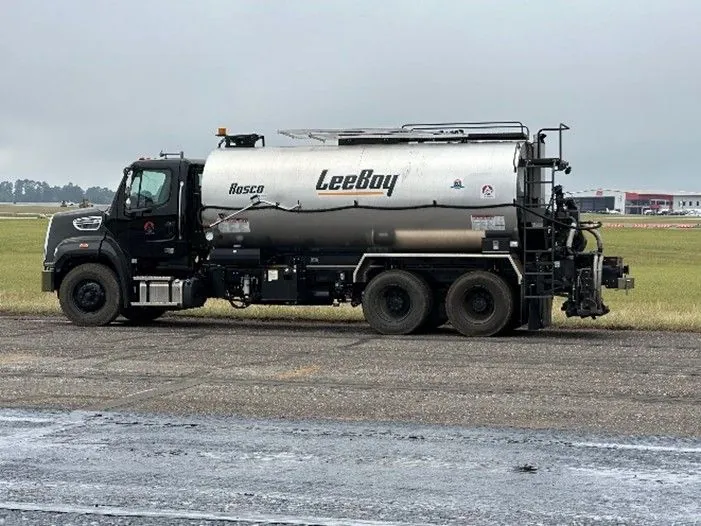
Asphalt distributors (see Figure 69 and Figure 70) are designed specifically to apply asphalt products uniformly. They consist of a truck- or trailer-mounted insulated tank ranging in capacity from 800 to 5,500 gal (3,000 to 20,800 L). Most distributors are equipped with a heating system that will maintain the material at the proper application temperature. They are also equipped with a power-driven pump that circulates the tack coat material from the distributor to the spray bar and creates pressure in the spray bar. Although the methods of maintaining pressure may vary, all distributors use pumps to deliver asphalt material to the spray bar. The circulating system, which consists of an engine- or hydraulic-driven pump, does the following:
Fills the distributor tank.
Circulates material through the bar and tank.
Sprays material through the bar or hand wand.
Draws material back to the tank from the bar or hand wand.
Pumps material from the tank to outside storage.
Transfers material from one storage tank to another.
The circulation system on a distributor is capable of handling products at a range of viscosities, temperatures, and application rates. Heavy, stiff asphalt binders require heating to higher spraying temperatures and may require a heavy-duty pump and heater system. A system of spray bars with nozzles applies the asphalt to the road’s surface. The nozzle type should match the material volume and viscosity. Spray bars cover widths of up to 30 ft (9.1 m) in one pass.
Source: National Asphalt Pavement Association Figure 69. Asphalt Distributor
Source: Asphalt Institute Figure 70. Tack Coat Application
The correct pump speed and pressure control the spray fan. Too low of a pressure may result in streaking from a nonuniform discharge of material from the individual nozzles. Too high of a pressure, besides atomizing the asphalt, may distort the spray fan. Manufacturers supply charts and data for proper pump speed or pressure for determining the volume-per-minute of discharge for each nozzle size.
A tachometer is used as an aid in maintaining uniform distributor speed. Newer distributors have interlocks between the asphalt pump and the forward speed of the distributor. As the distributor changes speed, the pump speed is automatically adjusted to compensate for the change in speed of the distributor, thus maintaining a constant application rate. Due to all these variables, it is important to ensure a proper and uniform application of tack coat through routine verification or calibration checks of each individual distributor, with recalibrations as needed. At a minimum, it is recommended that distributors be calibrated annually. A standard that is helpful when calibrating is ASTM D-2995, “Standard Practice for Estimating Application Rate and Residual Application Rate of Bituminous Distributors.”
5.5.4.1 Loading the Distributor: Safety Considerations
Caution is required by distributor operators and those responsible for loading the various materials into the distributor to avoid dangerous scenarios. Table 7 offers a guide for loading products in a safe manner.
Table 7. Product Loading Guidance
Source: Asphalt Institute *Any remaining material will be dangerous.
5.5.4.2 Setting up the Distributor
One of the most important parts of the distributor is the spray bar. The spray bar is mounted on the back of the distributor and is composed of a series of spray nozzles evenly spaced (i.e., every 4 inches [100 mm]) along the bar. It is essential that the spray bar has constant pressure and temperature along the entire width for equal output from all nozzles. To accomplish this, the spray bar is equipped with a return line for continuous circulation of heated and pressurized material. Most models are equipped with shutoff valves on each nozzle, or groups of nozzles, to optimize a spray pattern or for spraying irregular areas.
The distributor must be properly set up to apply the desired application rate uniformly for the entire length and width of the area to be tacked. Proper setup includes ensuring correct nozzle size, spacing, and orientation on the spray bar; spray bar height; and distributor speed. Proper nozzle selection is imperative for consistent and uniform application of the materials. Users are encouraged to consult with their equipment manufacturer for guidance on nozzle selection.
The distributor must be properly set up to apply the desired application rate uniformly for the entire length and width of the area to be tacked. Proper setup includes ensuring correct nozzle size, spacing, and orientation on the spray bar; spray bar height; and distributor speed.
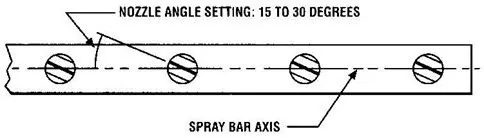
Before use, nozzles should be checked for damage and proper setting. The angle of the long axis of the nozzle openings (see Figure 71) must be adjusted so that the spray fans do not interfere with each other. The nozzle angle varies according to the make of the distributor but is typically between 15 and 30 degrees. It is important that all nozzles be set at the same angle.
Source: Asphalt Institute Figure 71. Proper Nozzle Alignment
Some operators will set end nozzles at a different angle (from 60 to 90 degrees with respect to the spray bar) to try to obtain a good, straight edge. This practice should not be permitted as it will produce a fat streak on the edge and rob the adjacent spray fan of the overlap from this nozzle. Using a special end nozzle set at the same angle as all the other nozzles will provide more uniform coverage and make a better edge.
Adjusting the height of the spray bar to obtain uniform coverage of the tack coat material is a critical step in distributor setup. The spray bar should be set to obtain triple or, at minimum, double overlap (coverage). Choosing which of these coverages is best for a given scenario is based on many factors. Regardless of which option is used, the spray bar height must be precisely set to avoid any streaking in the tack application that can cause uneven tack coverage (see Figure 72). Spray bars set too high can result in wind distortion. A best practice is to set the spray bar height to get triple lap coverage. With the nozzles at 4-inch (100-mm) centers, a bar height of 12 inches (300 mm) off the ground is required to achieve triple overlap.
However, tack is a very light application that may require smaller-orifice nozzles to develop nice, full spray fans, especially when triple overlap is used. In addition, higher forward ground speeds are typically needed to apply the desired application rate. Smaller-orifice nozzles tend to clog easier, and faster forward ground speeds are not always desirable in a construction zone. Double overlap or single coverage using larger nozzles and slower speeds is sometimes necessary. While not preferred, most inspectors seem to accept variations such as shooting out of every other or every third nozzle, along with bar height and nozzle angle adjustments, provided the result is uniform coverage and the application rate is maintained.
For best results, the height of the spray bar above the road surface should not vary more than 1/2 inch (12.5 mm) during application. Additional steps must be taken to ensure this maximum permissible height variance is not violated as the load lightens on the suspension of the distributor truck. Most distributors now have automated mechanical controls to maintain the proper height.
Source: Asphalt Institute Figure 72. Spray Fan Overlap
5.5.4.3 Determining Emulsion Application Temperature
Recommendations for spraying temperatures for asphalt emulsions are generally in the 120–180 °F (50–80 °C) range. For tack coats specifically, being in the upper portions of this range reduces the break time for the emulsion, which speeds the construction process. Review of local specifications and the material supplier’s recommendations for individual situations is encouraged.
5.5.4.4 Verifying Application Rates
It is important to verify the final application rate of tack coat applied to compare against the specified rate (see recommended rates in Section 5.5.2). This section covers calculating the residual tack coat rate of the emulsion applied. Application rates are most often expressed as a volume per area, such as gallons/square yard or liters/square meter, but they can also be expressed in terms of mass as pounds/square yard or kilograms/square meter. Specifiers should designate whether the volume to be placed is a residual binder rate, emulsion rate, or a specific diluted rate.
It is important to verify the final application rate of tack coat applied to compare against the specified rate.
5.5.4.5 Calculating Application Rate by Volume
The calculations to determine tack coat applications are rather straightforward. All asphaltic materials’ volumes change with temperature; therefore, a standard temperature is required to determine the appropriate volumes used. The volume of asphalt emulsions is reported at 60 °F (15.5 °C), therefore, the specified application rates shown in Table 5 and Table 6 use volumes at 60 °F (15.5 °C). Table 8 provides the necessary temperature-volume corrections needed to convert volumes at other temperatures to the standard 60 °F (15.5 °C) volume.
Residual asphalt application rate calculations need to account for not only the temperature but also the water that is present in an undiluted emulsion and any water added during dilution. The following steps can be useful when calculating the tack coat application rate by volume in gallons/square yard:
Step 1:Determine the distance traveled. Step 2:Calculate the area covered = distance traveled X width sprayed. (convert from square feet to square yard if needed). Step 3:Calculate the gallons of material applied = beginning volume—ending volume. The volumes may be determined by using a dipstick calibrated to the truck’s tank (much preferred), or onboard meters. Step 4:Correct for temperature back to 60 °F by applying correction factor. Step 5:Account for any dilution. Step 6:Calculate residual asphalt by accounting for the water in the original emulsion. Step 7: Calculate residual asphalt application rate which is the gallons of residual asphalt applied divided by the area of application.
The same steps can be used to calculate the tack coat rate by volume in L/sq m.
5.5.4.6 Calculating Application Rate by Mass
Application rates may also be calculated using the mass of the applied product. Most emulsion manufacturers will show the weight per gallon at 60 °F on the bill of lading that accompanies the shipment. When weigh scales are available, the mass of the distributor can be determined before and after application to determine the amount of material sprayed. Note that a temperature correction is not needed when calculating by mass as temperature changes do not affect the mass of the materials. The calculation process is very similar to the steps shown above.
The application rate (shot rate) calculations by mass are as follows:
Step 1: Determine distance traveled. Step 2: Calculate the area covered, multiply the distance traveled by the width sprayed. (Convert from sq. ft. to sq. yd. if needed). Step 3: Calculate mass of diluted emulsion applied. Step 4: Calculate undiluted emulsion mass. This calculation assumes unit weight of the diluted emulsion is equivalent to unit weight of the undiluted emulsion. Step 5: Calculate the gallons of emulsion used. Step 6: Calculate residual asphalt application.
The same steps can be used to calculate the tack coat rate by volume in L/sq m.
Table 8. Temperature-Volume Corrections to 60 °F (15.6 °C) for Emulsified Asphalt
Source: Asphalt Institute
5.6 SUMMARY
The following key factors should be considered when monitoring surface preparation operations:
A prime coat is generally not needed on subgrade soil unless the prepared subgrade at the proper moisture content will not be paved for several weeks. There is a difference of opinion on the benefits of using a prime coat on a granular base course, but in many cases a prime coat can be eliminated without detrimental effect on the performance of the pavement structure, especially when the pavement structure to be placed on the base course is relatively thick—maybe 6–8 inches (150–200 mm). With thinner pavements, the prime coat becomes more important.
Before paving an existing surface, any failures in the surface of the existing pavement must be removed and replaced or repaired by patching.
If cracks are present in an existing asphalt pavement surface, they generally should be sealed individually, or some type of surface treatment may be applied to the whole roadway area. Removing the distressed surface by milling prior to overlaying is also a very common approach. Joints in PCC pavement that are poorly sealed should be routed out and sealed. Rocking PCC slabs should be stabilized.
A rough, uneven asphalt surface should be leveled with asphalt mix (using a paver to place the mix) to fill in the low spots on the surface, or it should be milled to create an even surface while removing surface distresses.
Once the needed repairs have been completed, the pavement surface should be cleaned of all dust, dirt, and other debris. This should be accomplished using multiple passes of a mechanical broom. If brooming does not remove all accumulated dirt, flushing with air or water may be required.
The application of a tack coat must be accomplished before an overlay is constructed on an existing asphalt or PCC surface.
Proper distributor setup is critical to the successful application of tack coat. The distributor used should be checked to ensure that all the nozzles are open and set at the correct angle and that the spray bar is at the proper height above the pavement surface.
The application rate for the tack coat should be based on the desired residual amount of asphalt cement on the road surface, which should be between 0.040 and 0.070 gal/yd2 (0.181 and 0.317 L/m2) for normal surfaces. The application rate should also be based on the actual amount of asphalt cement in the emulsion—whether the emulsion is diluted or not before it is applied. For example, an undiluted SS-1 emulsion should be applied from the distributor at a rate of 0.060 gal/yd2 (0.271 L/m2) to obtain 0.040 gal/yd2 (0.181 L/m2) of residual asphalt on the pavement surface.
Milled pavements may need a greater amount of residual tack coat. Too little tack coat will not provide the needed bond between the old and new layers. On the other hand, too much tack coat may promote slippage of the new overlay on the old pavement or bleeding of the tack material through a thin overlay.
Asphalt mixture should be placed on top of an emulsion tack coat that has broken—changed color from brown to black. The tack coat should not be picked up and tracked by the haul trucks, however.
Tack coat should not be left exposed to traffic. If doing so is necessary, proper precautions, such as reducing the posted speed limit on the roadway and sanding the surface with excess sand being broomed from the surface, should be taken.
A tack coat should be placed between layers of new asphalt. The amount of residual asphalt on the new roadway surface should be approximately half that appropriate for an old, tight, existing pavement surface.
Information
There are no items associated with the selected chapter.