
12. Mat Problems
12.12 Roller Marks
12.12.1 Description

Watch Video
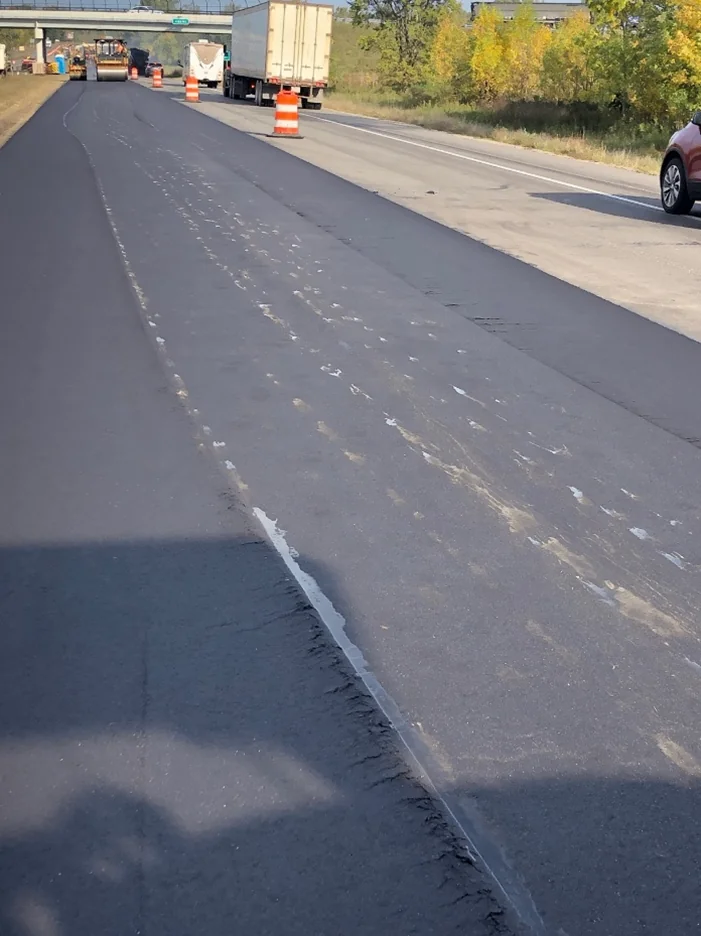
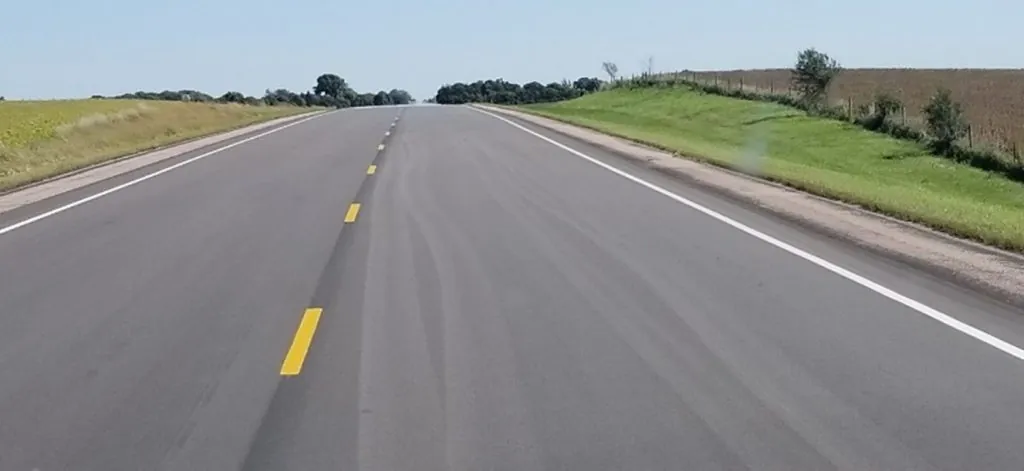
During the compaction process—whether vibratory static steel-wheel or pneumatic tire rollers are used—longitudinal creases or marks are left in the surface of the mix. Once the mix has cooled to a temperature range of 160 °F to 140 °F (70 °C to 60 °C), these marks are typically removed by the finish roller. Roller marks are indentations that remain in the surface of the mix after rolling has been completed (see Figure 174). With some mixes, pneumatic tire rollers may sometimes leave shadows on the surface of the mix after rolling has been completed (see Figure 175).
Roller marks may also exist in the asphalt surface when any roller is parked on the hot mat for a period of time or when a vibratory roller is vibrated in place. Particularly when used in the breakdown position, pneumatic tire rollers can leave visible longitudinal marks that can still be seen after the finish rolling has been completed. Vibratory washboard marks may be visible if that roller is operated at an improper vibratory amplitude, frequency setting, or speed, as shown in Figure 176.
12.12.2 Causes
Roller marks can be an indication that the proper number of roller passes has not been made over the mix (see Chapter 8).
Source: National Center for Asphalt Technology
Figure 174. Roller Marks in a Freshly Laid Asphalt Pavement
Source: Asphalt Institute
Figure 175. Pneumatic Roller Shadows in a New Asphalt Pavement

Source: Asphalt Institute
Figure 176. Washboard Marks Left by an Improperly Operated Vibratory Roller
If the compaction process is halted before the required amount of rolling has been completed or if the mix cools before the compaction process has been finished, the longitudinal marks or creases made by the rolling process will remain in the surface of the mix.
Roller marks left in an asphalt layer also may indicate a tender mix (see Section 8.6.2). The roller operator will normally be unable to remove all the marks left by the compaction equipment if the mix is tender or unstable. A tender mix usually will not support the weight of the finish roller until it has cooled to the point at which the viscosity of the asphalt binder has increased enough to stiffen the mix. By the time the mix has decreased in temperature to this point, however, the required level of density can generally no longer be achieved because the mix has lost its workability. For this reason, the roller marks or indentations left during the breakdown and intermediate roller passes usually cannot be removed during the finish rolling process. All the asphalt binder, aggregate, and mix properties that contribute to the formation of a tender mix, as discussed above, also contribute to the inability of the finish roller to eliminate roller marks.
12.12.3 Solutions
If the cause of roller marks is inadequate compaction, additional roller passes should be made with the breakdown, intermediate, or finish rollers to properly densify the mix. The solutions for inadequate compaction related to mix design deficiencies all involve changes to the mix design and to the production of the mix at the asphalt plant. Asphalt binder quality and content, aggregate properties and characteristics, and mix temperature all play a significant role in the workability and stability of the asphalt material under the compaction equipment.
Asphalt binder quality and content, aggregate properties and characteristics, and mix temperature all play a significant role in the workability and stability of the asphalt material under the compaction equipment.
Roller marks normally cannot be removed from a tender mix until the mix temperature has decreased to a relatively low level—usually less than 160 °F (70 °C).
Sometimes it is possible, depending on environmental conditions and the properties of the mix, to remove roller marks left in the mix by using a pneumatic tire roller. If the surface of the mix is hot enough (140 °F [60 °C] or more), several passes with a pneumatic tire roller can be made to “iron out” the surface of the pavement. Finally, roughness or washboarding caused by incorrect operation of a vibratory roller should be eliminated by using proper operating techniques with this equipment.
12.12.4 Effects on Performance
Roller marks are normally an indication that the proper level of compaction has not been achieved. In terms of ultimate pavement durability, the air void content or density of the mix is the single most important characteristic that governs the performance of the asphalt mixture under traffic. If the air void content of a dense-graded mix is high—the density is too low—the pavement generally will not perform well under traffic. Shadows from pneumatic tire rollers have no detrimental effect on performance and will typically disappear soon after the pavement is opened to traffic.