
AAPTP
  • Small
  • Medium
  • Large
  • Small
  • Medium
  • Large
  • Home
  • Handbook
    • Asphalt Paving Handbook
    • Videos
    • Figures
    • Tables
  • Checklists
  • Abbreviations
  • About
  • HOME
  • Handbook
    • Asphalt Paving Handbook
    • Videos
    • Figures
    • Tables
  • CHECKLISTS
  • ABBREVIATIONS
  • About
1. Introduction
  • 1.1 Handbook Purpose and Organization
  • 1.2 Airfield Paving
  • 1.3 Asphalt Mixtures Defined and Classified
  • 1.4 Workmanship
  • 1.5 Certification and Accreditation Programs
2. Project Organization
  • 2.1 Introduction
  • 2.2 Project Documents
  • 2.3 Preconstruction Conference
  • 2.4 Ongoing Communication
  • 2.5 Ongoing Records
  • 2.6 Safety
3. Asphalt Materials and Mix Design
  • 3.1 Introduction
  • 3.2 Asphalt Binder: Grading Systems And Properties
  • 3.3 Aggregate Characteristics And Properties
  • 3.4 Mixture Volumetrics
  • 3.5 Asphalt Mix Properties
  • 3.6 Additives
  • 3.7 Mix Design Procedures
  • 3.8 Laboratory Versus Plan-produced Mixes
  • 3.9 Summary
4. Mix Production
  • 4.1 Introduction
  • 4.2 Material Storage and Handling
  • 4.3 Aggregate Cold Feed
  • 4.4 Aggregate Drying and Heating
  • 4.5 Batch Plants
  • 4.6 Drum and Continuous Plants
  • 4.7 Emission-Control System
  • 4.8 Temporary Mixture Storage
  • 4.9 Weighing and Loadout
  • 4.10 Safety
  • 4.11 Troubleshooting and Checklists
5. Surface Preparation
  • 5.1 Introduction
  • 5.2 Base Preparation for New Asphalt Pavements
  • 5.3 Asphalt Surface Preparation for Asphalt Overlays
  • 5.4 PCC Surface Preparation For Asphalt Overlays
  • 5.5 Tack Coat
  • 5.6 Summary
6. Mixture Delivery
  • 6.1 Introduction
  • 6.2 Planning
  • 6.3 Truck Types
  • 6.4 Proper Truck Loading
  • 6.5 Hauling Procedures
  • 6.6 Unloading the Mix
  • 6.7 Tracking Quantities
7. Mix Placement
  • 7.1 Introduction
  • 7.2 Tractor Unit
  • 7.3 Screed Unit
  • 7.4 Grade Control
  • 7.5 Layer Thickness
  • 7.6 Establishing Paver Speed
  • 7.7 Related Paving Operations
  • 7.8 Best Practices Checklists
8. Compaction
  • 8.1 Introduction
  • 8.2 Definitions
  • 8.3 Rollers
  • 8.4 Factors Affecting Compaction
  • 8.5 Compaction Variables Under The Operator’s Control
  • 8.6 Determination of Rolling Pattern
  • 8.7 Roller Checklists
9. Joint Construction
  • 9.1 Introduction
  • 9.2 Transverse/Construction Joints
  • 9.3 Longitudinal Joints
  • 9.4 Echelon Paving and Rolling
  • 9.5 Unconventional Longitudinal Joint Methods
10. Segregation
  • 10.1 Introduction
  • 10.2 Recognizing Physical Segregation, Causes, and Solutions
  • 10.3 Four Stages Where Segregation Can Originate
  • 10.4 Thermal Segregation
  • 10.5 Confirming and Quantifying Segregation
11. Quality Assurance
  • 11.1 Introduction
  • 11.2 Definitions
  • 11.3 General Types Of Specifications
  • 11.4 Quality Control Plan
  • 11.5 Sampling Methods
  • 11.6 Quality Control At The Plant
  • 11.7 Quality Control In The Field: Placement And Compaction
  • 11.8 Acceptance
12. Mat Problems
  • 12. Mat Problems
  • 12.1 Surface Waves
  • 12.2 Tearing (Streaks)
  • 12.3 Nonuniform Texture
  • 12.4 Screed Marks
  • 12.5 Screed Responsiveness
  • 12.6 Surface (Auger) Shadows
  • 12.7 Poor Precompaction
  • 12.8 Joint Problems
  • 12.9 Checking
  • 12.10 Shoving And Rutting
  • 12.11 Bleeding And Fat Spots
  • 12.12 Roller Marks
  • 12.13 Poor Mix Compaction
  • 12.14 Other Pavement Problems
Appendix
  • AAPTP Airport Asphalt Videos

12. Mat Problems

12.3 Nonuniform Texture

12.3.1 Description

Nonuniform mat texture (see Figure 165) can be described as differences in the appearance of the mix, both transversely and longitudinally, as it is placed and compacted. Normally, minor differences in surface texture will be apparent because of differences in the alignment of the larger coarse aggregate particles as the mix passes out from beneath the paver screed. In addition, a mix with a higher fine aggregate (sand) content will have a more uniform surface texture than a mix containing a larger percentage of coarse aggregate.

12.3.2 Causes

Many factors related to the operation of the asphalt paver affect the uniformity of the surface texture of the mix (see Chapter 7). A variable amount of mix against the screed, caused by overloading the augers or running the hopper empty between truckloads, can cause variations in the amount of mix tucked under the screed and thus produce a nonuniform texture.
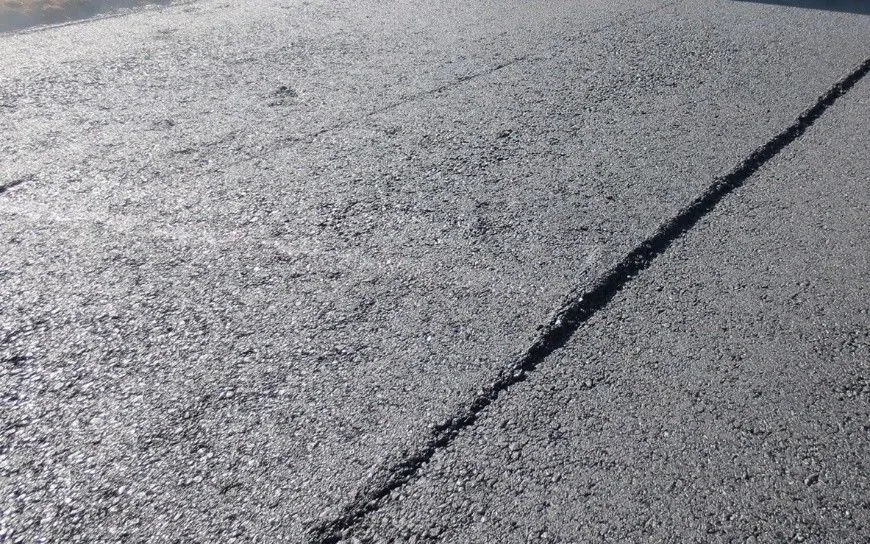
Figure 165. Nonuniform Mat Texture

Source: National Asphalt Pavement Association
Figure 165. Nonuniform Mat Texture

Improper screed maintenance, including worn or loose screed plates or screed extensions incorrectly installed, as well as low screed vibratory frequency, may alter the mat texture and cause nonuniformity. In addition, a low mix temperature, caused either by plant problems or by the paver sitting too long between truckloads of mix, can be a factor in uneven mat texture, especially if the paver screed is also cold. The tearing that results when the compacted layer thickness is less than twice the dimension of the largest aggregate particles is still another contributing factor.

A soft or yielding base under the course being constructed may cause the new layer to have a variable surface texture (see Section 5.2). Moreover, segregation of the mix caused by poor mix design (Section 3.4.4) or improper handling of the mix during production (Section 4), loading (Section 6.4), hauling (Section 6.5), unloading (Section 6.6), or placing (Chapter 7) operations can contribute to a nonuniform surface texture. The variability of the texture will be affected as well by any factors that cause nonuniformity in the mix, such as deviations in aggregate gradation, asphalt content, or mix temperature (see Chapter 3).

12.3.3 Solutions

The solutions for nonuniform surface texture are as varied as the causes. Paver operation, particularly regarding the need for a constant head of material in front of the screed, should be monitored closely. The paver and screed should both be well maintained and in good operating condition. The compacted thickness of the mat being placed should be designed so that dense-graded mixes have a lift thickness of at least four times the NMAS when compacted. Lift thicknesses for fine-graded mixtures should be at least three times the NMAS.

Finally, a mix that is tender, variable in aggregate gradation or asphalt content, or easily segregated should be modified to increase its stiffness and improve its properties before it is produced at the plant and delivered to the paver for laydown.

12.3.4 Effects on Performance

Nonuniform surface texture is usually associated with nonuniform density. The same compactive effort will generally achieve lower density in areas in which the coarse aggregate has been dragged by the paver screed or segregation of the mix has occurred, as compared with areas having uniform surface texture. As density decreases and air void content increases, the durability and serviceability of the asphalt mat decrease markedly.

Previous Section
Next Section

© National Asphalt Pavement Association (NAPA). All rights reserved|Privacy Policy

6406 Ivy Lane, Suite 350 Greenbelt, Maryland 20770-1441

|888-468-6499
  • LinkedIn
  • Facebook
  • Twitter
  • YouTube
  • Instagram
Information

There are no items associated with the selected chapter.