
4. Mix Production
4.8 Temporary Mixture Storage
To prevent plant shutdowns due to interruptions in paving operations or shortages of haul trucks, most asphalt plants are equipped with either one or more storage silo(s) or a surge bin for temporary storage of asphalt mix. As the fresh mix exits the plant, it is deposited onto an enclosed drag-slat type of conveyor that takes it to the top of the storage silo or bin, where it enters the bin and is held until discharged into trucks from the bottom.
Insulated storage silos (shown in Figure 51), with capacities as high as several hundred tons, can store mixture for several hours. Extended storage times will impact the volumetric properties of the mix and may prematurely age the binder. For this reason, most agencies have specifications that limit the length of time a mix can be held in storage.
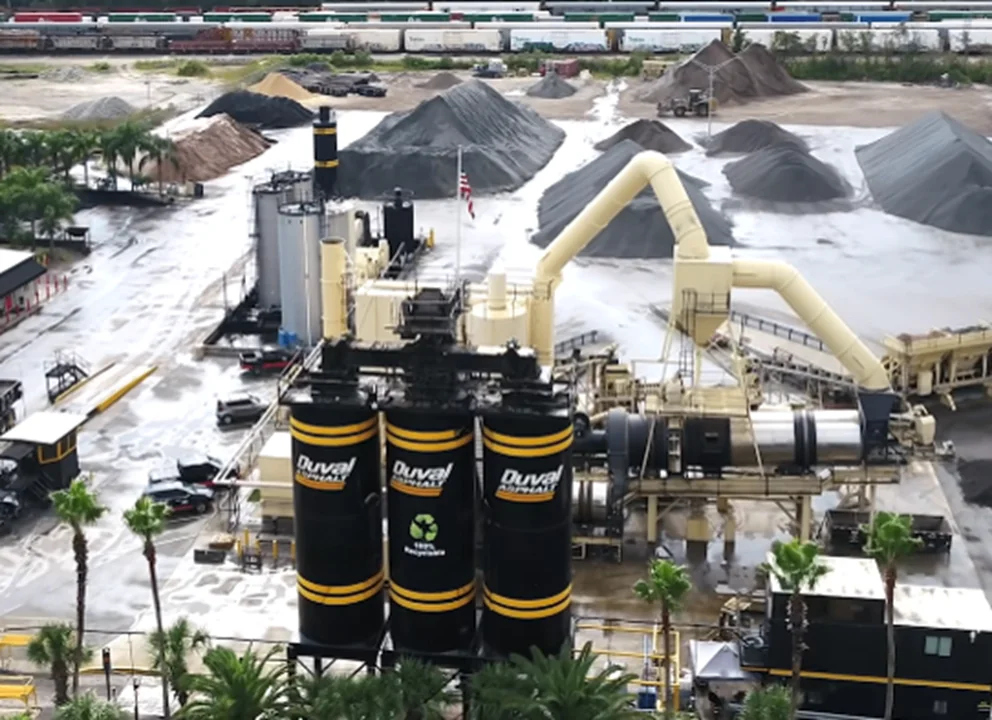
Source: Duval Asphalt
Figure 51. Insulated Storage Silos
Portable drum-mix plants equipped with self-erecting storage structures are most frequently used at remote or temporary plant sites. These non-insulated surge bins (shown in Figure 52 and Figure 53) are smaller and can store mix only for relatively short periods of time.
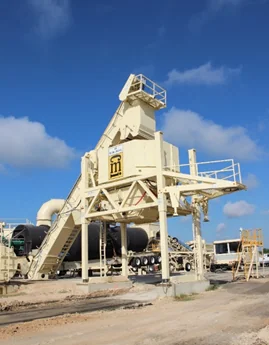
Source: Asphalt Institute
Figure 52. Portable Surge Bin
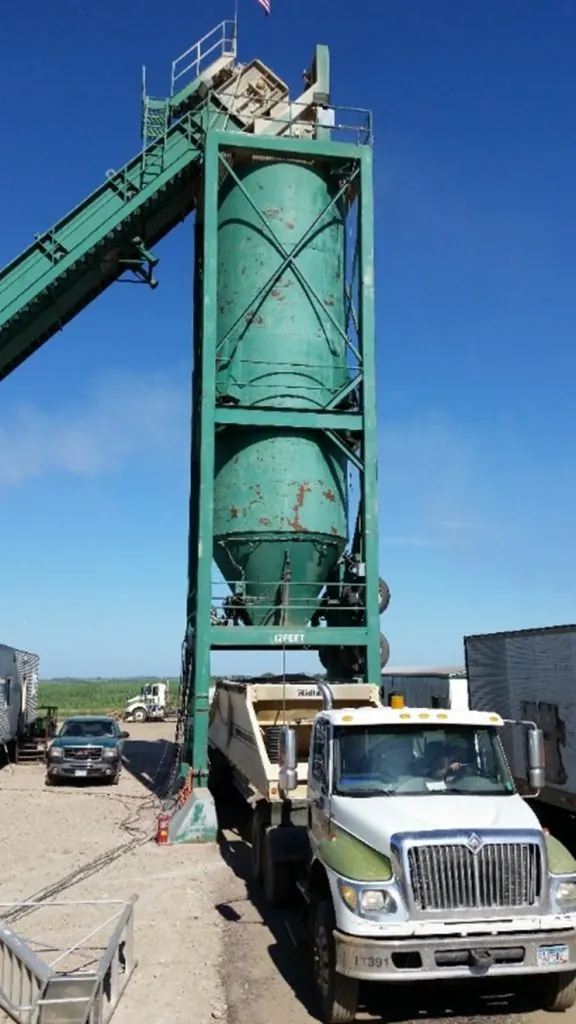
Source: Asphalt Institute
Figure 53. Portable Storage Silo
Silos work well if certain precautions are followed, but they can be a major source of segregation if the mix is not introduced into the silo properly. Mix should never be allowed to flow continuously into a storage silo; particle size differences and momentum will cause the mix to segregate. Typically, a small batcher (or holding bin) is placed under the drag-slat conveyor with its opening directly aligned on the centerline of the silo. Once a pre-set amount is accumulated, gates in the bottom of the batcher automatically cycle fully open and fully closed, releasing the mix in a single mass (see Figure 54). During continuous operation, the batcher should never completely cycle empty, and the mix level in the storage silo should be maintained between one-third and two-thirds of the silo capacity to minimize segregation.
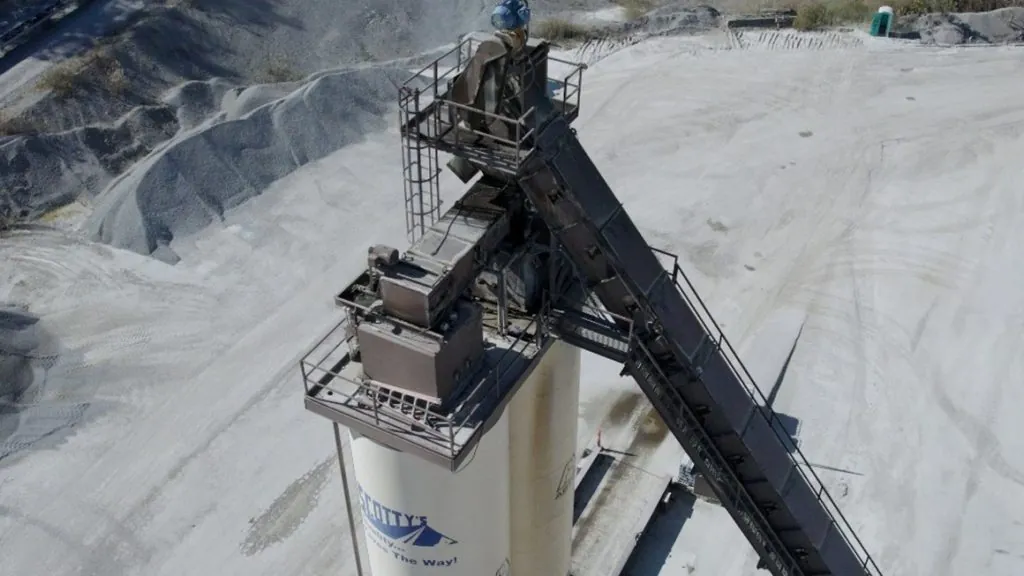
Source: National Asphalt Pavement Association
Figure 54. Silo Batcher