
AAPTP
  • Small
  • Medium
  • Large
  • Small
  • Medium
  • Large
  • Home
  • Handbook
    • Asphalt Paving Handbook
    • Videos
    • Figures
    • Tables
  • Checklists
  • Abbreviations
  • About
  • HOME
  • Handbook
    • Asphalt Paving Handbook
    • Videos
    • Figures
    • Tables
  • CHECKLISTS
  • ABBREVIATIONS
  • About
1. Introduction
  • 1.1 Handbook Purpose and Organization
  • 1.2 Airfield Paving
  • 1.3 Asphalt Mixtures Defined and Classified
  • 1.4 Workmanship
  • 1.5 Certification and Accreditation Programs
2. Project Organization
  • 2.1 Introduction
  • 2.2 Project Documents
  • 2.3 Preconstruction Conference
  • 2.4 Ongoing Communication
  • 2.5 Ongoing Records
  • 2.6 Safety
3. Asphalt Materials and Mix Design
  • 3.1 Introduction
  • 3.2 Asphalt Binder: Grading Systems And Properties
  • 3.3 Aggregate Characteristics And Properties
  • 3.4 Mixture Volumetrics
  • 3.5 Asphalt Mix Properties
  • 3.6 Additives
  • 3.7 Mix Design Procedures
  • 3.8 Laboratory Versus Plan-produced Mixes
  • 3.9 Summary
4. Mix Production
  • 4.1 Introduction
  • 4.2 Material Storage and Handling
  • 4.3 Aggregate Cold Feed
  • 4.4 Aggregate Drying and Heating
  • 4.5 Batch Plants
  • 4.6 Drum and Continuous Plants
  • 4.7 Emission-Control System
  • 4.8 Temporary Mixture Storage
  • 4.9 Weighing and Loadout
  • 4.10 Safety
  • 4.11 Troubleshooting and Checklists
5. Surface Preparation
  • 5.1 Introduction
  • 5.2 Base Preparation for New Asphalt Pavements
  • 5.3 Asphalt Surface Preparation for Asphalt Overlays
  • 5.4 PCC Surface Preparation For Asphalt Overlays
  • 5.5 Tack Coat
  • 5.6 Summary
6. Mixture Delivery
  • 6.1 Introduction
  • 6.2 Planning
  • 6.3 Truck Types
  • 6.4 Proper Truck Loading
  • 6.5 Hauling Procedures
  • 6.6 Unloading the Mix
  • 6.7 Tracking Quantities
7. Mix Placement
  • 7.1 Introduction
  • 7.2 Tractor Unit
  • 7.3 Screed Unit
  • 7.4 Grade Control
  • 7.5 Layer Thickness
  • 7.6 Establishing Paver Speed
  • 7.7 Related Paving Operations
  • 7.8 Best Practices Checklists
8. Compaction
  • 8.1 Introduction
  • 8.2 Definitions
  • 8.3 Rollers
  • 8.4 Factors Affecting Compaction
  • 8.5 Compaction Variables Under The Operator’s Control
  • 8.6 Determination of Rolling Pattern
  • 8.7 Roller Checklists
9. Joint Construction
  • 9.1 Introduction
  • 9.2 Transverse/Construction Joints
  • 9.3 Longitudinal Joints
  • 9.4 Echelon Paving and Rolling
  • 9.5 Unconventional Longitudinal Joint Methods
10. Segregation
  • 10.1 Introduction
  • 10.2 Recognizing Physical Segregation, Causes, and Solutions
  • 10.3 Four Stages Where Segregation Can Originate
  • 10.4 Thermal Segregation
  • 10.5 Confirming and Quantifying Segregation
11. Quality Assurance
  • 11.1 Introduction
  • 11.2 Definitions
  • 11.3 General Types Of Specifications
  • 11.4 Quality Control Plan
  • 11.5 Sampling Methods
  • 11.6 Quality Control At The Plant
  • 11.7 Quality Control In The Field: Placement And Compaction
  • 11.8 Acceptance
12. Mat Problems
  • 12. Mat Problems
  • 12.1 Surface Waves
  • 12.2 Tearing (Streaks)
  • 12.3 Nonuniform Texture
  • 12.4 Screed Marks
  • 12.5 Screed Responsiveness
  • 12.6 Surface (Auger) Shadows
  • 12.7 Poor Precompaction
  • 12.8 Joint Problems
  • 12.9 Checking
  • 12.10 Shoving And Rutting
  • 12.11 Bleeding And Fat Spots
  • 12.12 Roller Marks
  • 12.13 Poor Mix Compaction
  • 12.14 Other Pavement Problems
Appendix
  • AAPTP Airport Asphalt Videos

7. Mix Placement

7.5 Layer Thickness

Youtube Video Icon

Watch Video

Yield Calculations

After asphalt material is spread and struck off by the screed, it is in a “loose” state even though it has received some initial compaction from the tamper bar or vibratory screed. It is critical that the thickness of the loose mixture after it has been placed is sufficient to allow for consolidation through the compaction process so that the final thickness meets the thickness specified in the project plans.

To accomplish this, a rolldown factor for each material must be considered. This factor varies depending on mixture type, with a common rolldown factor (for a typical dense-graded mix) being approximately 25 percent (see Figure 109). For instance, assuming a 25-percent rolldown factor on a 2-inch compacted lift thickness, the thickness placed by the paver must be 25 percent thicker or 2.5 inches thick. When gap and open-graded materials are being placed, a rolldown factor of about 15 percent is probably more accurate. During paving operations, it is a best practice for the screed operator to regularly measure the thickness of the loose mat directly behind the paver. When necessary, adjustments to mat thickness should be made to ensure that the proper amounts are being placed. A more in-depth discussion regarding the construction of transverse joints at startup is discussed in Chapter 9, Section 9.2.2.
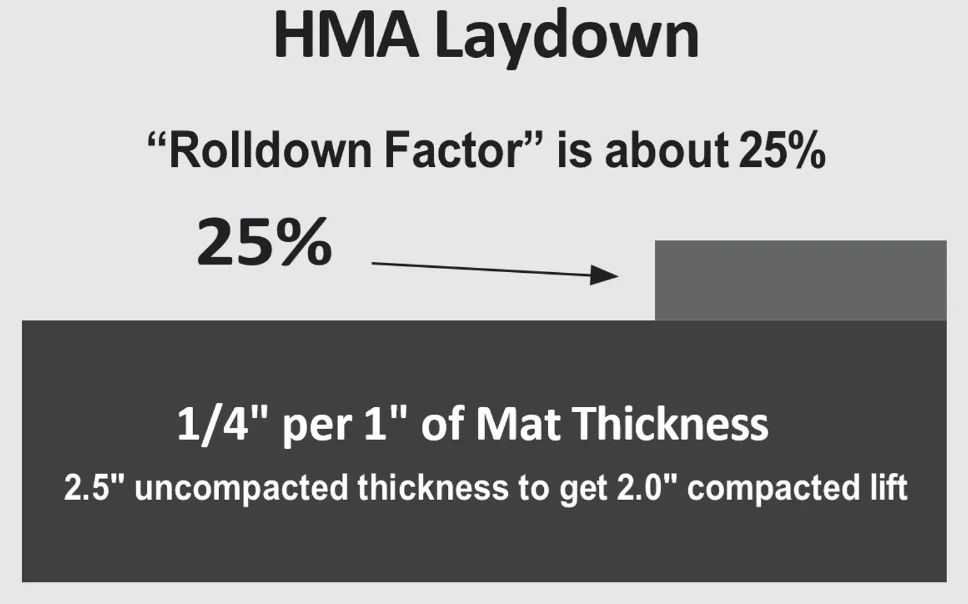
Figure 109. Rule of Thumb Rolldown Factor for Dense-Graded Mixtures

Source: Asphalt Institute
Figure 109. Rule of Thumb Rolldown Factor for Dense-Graded Mixtures

Spread rate is a useful calculation that onsite inspectors and paving foremen can use to confirm the paver is set up properly and placing the proper amount of material. It is based on the unit weight information from the lab and is expressed in terms of pounds per square yard of material for every inch of compacted thickness. These units are typically expressed as lbs/yd2-inch.

The formula for spread rate is as follows:

With this factor, quantities can be readily calculated as follows in any number of terms based on the width, feet, and the depth and compacted inches for a given distance:

Tons/linear foot (T/LF), which is useful determining tonnage to move a paver a certain distance.
Tons/project station (T/sta) to compare quantities with the project plan sheets.
Tons/mile (T/MI) to compare with overall contract quantities.

Previous Section
Next Section

© National Asphalt Pavement Association (NAPA). All rights reserved|Privacy Policy

6406 Ivy Lane, Suite 350 Greenbelt, Maryland 20770-1441

|888-468-6499
  • LinkedIn
  • Facebook
  • Twitter
  • YouTube
  • Instagram
Information

There are no items associated with the selected chapter.